
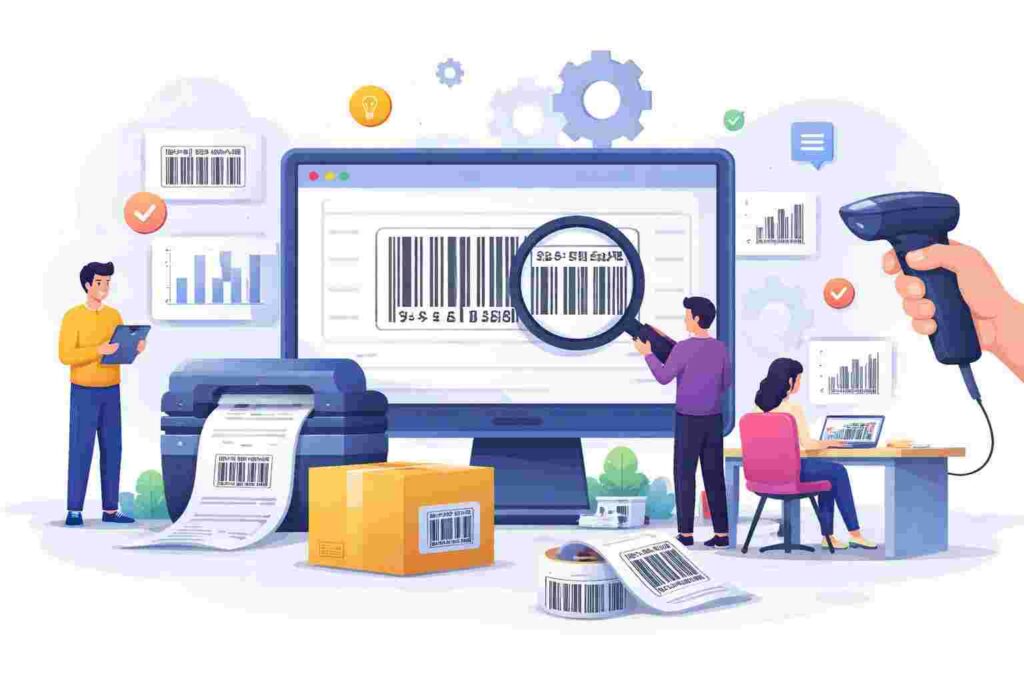
In today’s fast-paced retail and logistics industries, effectively managing inventory and tracking products is more critical than ever. This is where the importance of barcode create comes to the forefront. Barcodes not only streamline the product identification process but also enhance operational efficiency across various sectors. This article will delve into the essential steps for creating barcodes that ensure accuracy, compliance, and optimal results.
Table of Contents
Understanding Barcodes and Their Applications
Barcodes have become a ubiquitous part of modern commerce and logistics. These coding systems allow for quick data capture and retrieval, functioning as a bridge between physical products and digital records. Understanding the foundational aspects of barcodes is pivotal for any business looking to implement an efficient inventory management system.
Types of barcodes and their uses
- 1D Barcodes (e.g., UPC, EAN): Commonly used in retail settings for product identification.
- 2D Barcodes (e.g., QR Codes): Allow for more data storage and are often used in marketing and product packaging.
- PDF417: Used in transport and identification cards due to its ability to handle larger amounts of data.
- Data Matrix: Favored in electronics and automotive industries for small product labels.
- Code 128: Utilized for complex applications like transporting goods and healthcare labeling.
Industry-specific applications
- Retail: Enhances checkout speed and accuracy.
- Healthcare: Tracks medications and patient records efficiently.
- Manufacturing: Streamlines inventory control and supply chain management.
- Logistics: Optimizes shipping and receiving processes.
- Food Safety: Ensures traceability from farm to table for compliance.
Evolution of barcode technology
The journey of barcode technology has significantly transformed since its inception in the 1940s. Originally designed to streamline grocery checkout processes, barcodes have evolved through advancements in scanning technology, leading to the development of 2D barcodes that can hold more data than their 1D counterparts.
The innovation continues with the introduction of mobile scanning applications that allow smartphones to act as barcode scanners, further enhancing accessibility and functionality.
The Barcode Creation Process
Creating a barcode is a multi-step process that requires careful consideration of technological tools and design elements. Each stage plays a critical role in ensuring the barcode’s functionality and readability.
Software tools for barcode generation
- Dedicated barcode creation software (e.g., BarTender, ZebraDesigner)
- Online barcode generators (e.g., Barcode Generator, Free Barcode Creator)
- Integrated solutions in inventory management systems (e.g., Warehouse Management Tools)
- Custom software development options for specific business needs
- Mobile applications for on-the-go barcode creation
Designing barcode layouts
- Select the appropriate barcode type for data requirements.
- Choose the right dimensions to ensure scanner compatibility.
- Incorporate a human-readable format to facilitate manual input.
- Choose contrasting colors for optimal scanning speed.
- Add additional information such as expiration dates or batch numbers if needed.
Printing considerations
Once the barcode is designed, proper printing methods should be employed to ensure durability and readability. This includes selecting the right materials, ink types, and printing technologies.
- Choose high-quality materials for labels (vinyl, paper, etc.).
- Utilize thermal printing methods to avoid ink smudging.
- Ensure printers are calibrated correctly for optimal resolution.
- Test print barcodes before mass production to verify readability.
- Consider environmental factors that may affect barcode longevity (humidity, temperature).
Compliance and Standards in Barcode Creation
Compliance with industry standards is crucial when creating barcodes. Without adherence to established guidelines, barcodes risks being unreadable or misinterpreted, leading to inefficiencies and errors.
ISO standards for barcodes
The International Organization for Standardization (ISO) sets forth guidelines to ensure barcodes meet specific quality and functionality criteria. Familiarizing oneself with these standards is essential for creating barcodes that are compliant and efficient.
- ISO/IEC 15420 for barcodes
- ISO/IEC 18004 for QR code standards
- ISO/IEC 16388 for Data Matrix codes
- Understanding these standards aids in consistency and compliance.
- Failure to comply can lead to scanning issues and operational hurdles.
UPC vs. EAN standards
UPC (Universal Product Code) and EAN (European Article Number) are two prevalent barcode systems employed worldwide. UPC codes are primarily utilized in North America, while EAN codes are more common in Europe and international markets.
Understanding the differences is vital for businesses operating in multiple regions, ensuring their products are universally identifiable.
Regulatory compliance requirements
- Healthcare: FDA requires specific labeling for data matrices.
- Food safety: FDA and USDA enforce rules about tracking and traceability.
- Retail: Compliance with GS1 standards for product identification.
- Logistics: Follow international shipping standards to avoid delays.
- Understand regional requirements to ensure smooth operations across markets.
Impact of Barcodes on Supply Chain Efficiency
Barcodes have revolutionized how businesses manage their supply chains. By implementing an effective barcode system, organizations can enhance efficiency, reduce errors, and optimize inventory management.
Case studies in retail efficiency
Several retailers have witnessed substantial improvements upon implementing barcode systems. For example, retailer A streamlined its checkout processes and reduced checkout time by 30% by adopting barcode scanning technology, greatly improving customer satisfaction.
Logistics and distribution improvements
- Real-time tracking of shipments reduces delays.
- Improved accuracy in order fulfillment.
- Reduction in misplaced products due to better tracking.
- Enhanced visibility across supply chain networks.
- Lower operating costs through optimized processes.
Barcodes in inventory management
Inventory management systems that incorporate barcodes have shown significant benefits, including reduced errors in stock counts and improved stock visibility. One survey found that companies using barcode technology reduced their stock discrepancies by up to 70%.
Measuring the ROI of Barcode Implementation
Implementing a barcode system requires an upfront investment, making it essential to assess the return on investment (ROI). Understanding the financial benefits can help justify the integration of barcode systems into existing operations.
Cost-saving analysis
- Reduced labor costs through faster scanning and data entry.
- Lower inventory holding costs due to improved accuracy.
- Fewer errors leading to lower costs in product returns and replacements.
- Enhanced productivity leading to increased revenue generation.
- Investment in barcode technology pays for itself within months for most businesses.
Analyzing productivity gains
Data analytics play an essential role in measuring productivity improvements linked to barcode systems. For instance, a logistics company reported a 25% increase in efficiency due to a robust barcode tracking system, providing substantial ongoing cost savings.
Quantifying error reduction
Organizations can also realize significant savings by minimizing errors in their processes. Implementing a barcode system has been shown to reduce errors in inventory management by as much as 90%, which translates into less waste and lower financial losses.
Future Trends in Barcode Technology
As technology continues to advance, the future of barcode systems looks promising. Understanding emerging trends can help businesses stay ahead of the curve.
Emerging technologies like QR codes
QR codes have become increasingly popular due to their ability to store products with dynamic information. Businesses leveraging QR code technology can enhance the consumer experience by linking customers directly to product information, promotions, and additional content.
Integration with IoT devices
As the Internet of Things (IoT) expands, barcodes are being integrated into smart devices, providing real-time data and analytics. This facilitates better monitoring and tracking, offering businesses unprecedented insights into their operations.
Future-proofing barcode systems
- Incorporating flexibility to adapt to evolving technologies.
- Utilizing cloud-based systems for greater accessibility.
- Investing in scalable solutions to grow with the business.
- Regularly updating software and hardware for optimal performance.
- Staying informed about industry standards and adopting them promptly.
Common Challenges and Risks in Barcode Creation
As with any technology implementation, creating barcodes comes with its own set of challenges. It’s vital to be aware of these to mitigate risks effectively.
Technical errors in generation
Errors in the barcode development process can stem from incorrect data entry, poor design choices, or flaws in the software. Such mistakes can render barcodes unreadable, leading to operational hiccups and customer dissatisfaction.
Compatibility issues with existing systems
New barcode systems must interface seamlessly with existing technologies. Compatibility problems can barcode create confusion and slow down processes. Testing systems prior to implementation is vital.
Risks of improper barcode usage
Misuse of barcodes can occur due to a lack of training or outdated technology. Ensuring that staff are adequately trained can minimize errors and maximize efficiency in barcode usage.
Comparing Barcode Generators: A Review
As multiple barcode generation tools exist, understanding their features and functionality will help companies choose the right option for their specific needs.
Feature comparison of top tools
| Tool | Features | Pricing | User Experience |
|---|---|---|---|
| BarTender | Advanced design features, Security options, Integration capabilities | Subscription-based, Starts at $50/month | Highly rated for usability and support |
| ZebraDesigner | User-friendly interface, Flexible templates, Extensive barcode options | Starts at $199 one-time | Many users praise its intuitive design |
| Online Barcode Generator | Free, Quick generation, Limited customization | Free | Convenient for quick needs |
| Free Barcode Creator | Basic features, Open-source, Easy to use | Free | Good for basic needs without costs |
Cost analysis of barcode generators
When comparing barcode generators, It’s essential to consider the long-term costs associated with each tool, including maintenance and support expenses. While free tools may cater to basic needs, they often lack the advanced features needed for large-scale operations.
User experience feedback
User reviews reveal that businesses value tools that offer robust support and easy integration. Investing in premium options often leads to greater satisfaction due to their user-centric designs and flexibility.
Barcode Statistics and Market Trends
The barcode industry is continually evolving, with recent statistics showcasing its growth and adoption across various sectors. Understanding these trends can provide insights into market dynamics.
Market growth forecasts
According to recent market research, the global barcode market is expected to reach $5.239 billion by 2027, growing at a CAGR of over 5% from 2020 to 2027. This growth is driven by the increasing demand for barcode solutions across different industries.
Statistics on barcode adoption rates
- About 93% of retailers use barcode scanning technologies.
- The majority of the logistics sector has adopted barcode tracking systems.
- Research shows that barcodes have reduced errors in warehouses by as much as 60%.
- Over 70% of businesses report improved inventory accuracy.
- Investment in barcode solutions has accelerated because of e-commerce growth.
Impact of technology advancements
Advancements in scanning technology, mobile applications, and IoT integration are likely to propel barcode adoption further, offering businesses unprecedented efficiency and tracking capabilities.
Real-World Success: Case Studies in Barcode Implementation
Many companies have significantly improved their operations through successful barcode implementation. Analyzing these case studies provides valuable insights into best practices.
Before-and-after metrics
Case Study: Company X enhanced its distribution efficiency by 40% after implementing a barcode system. The before-and-after metrics demonstrated reductions in misplaced items and improved tracking accuracy.
Specific industry transformations
Another example involves a healthcare provider that adopted barcode medication administration. This change drastically reduced medication errors, enhancing patient safety while also streamlining inventory management.
Lessons learned from implementation
- Thorough training is essential for staff to maximize barcode system utility.
- Regular review and updates ensure that systems remain compliant and efficient.
- Continuously gathering user feedback can help refine the system.
- Assessing needs before implementation can optimize tool selection.
- Ongoing investments in technology pay off long term through increased efficiency.
Frequently Asked Questions about Barcode Creation
What tools are best for barcode creation?
The choice of barcode creation tools depends on your specific requirements and scale of operations. For larger businesses requiring advanced features, dedicated barcode software like BarTender or ZebraDesigner is recommended due to their robust capabilities and support options. For smaller operations or one-time uses, online barcode generators can suffice.
How do barcodes improve inventory control?
Barcodes improve inventory control by providing an automated mechanism for tracking products. This serialization allows for real-time updates on stock levels, reducing human error and enabling businesses to maintain accurate records. With greater accuracy, businesses can streamline ordering and ensure they never run out of critical items.
Can barcodes be generated for free?
Yes, many online barcode generators offer free services that allow users to barcode create basic quickly. However, these free tools may lack advanced features, scalability, or the ability to customize layouts as per specific business needs. For extensive applications, investing in a premium tool is advisable.
What are the common errors in barcode scanning?
Common scanning errors often arise from issues such as damage to barcode labels, low contrast in print designs, or using outdated equipment that fails to read certain barcode types. Ensuring that barcodes are properly printed and scannable is vital to minimizing these errors, along with regular maintenance of scanning devices.
How often should barcodes be updated?
Barcodes should be updated whenever there are changes in product details, such as price adjustments, rebranding, or regulatory requirement changes. Regular updates ensure that all information remains current and accessible, which plays a crucial role in operational efficiency.
What industries benefit most from barcode systems?
Several industries derive substantial benefits from barcode systems, particularly retail, logistics, healthcare, and manufacturing. These sectors utilize barcodes for tracking inventory, managing supply chains, and ensuring compliance, demonstrating the vast applicability of barcode technologies in enhancing operational processes.
Conclusion: Crafting Effective Barcodes for Optimal Outcomes
In summary, the process of barcode create encompasses various steps and considerations that are crucial for achieving accuracy and efficiency in inventory management and product tracking. By adhering to industry standards and leveraging modern technology, businesses can significantly enhance their operations. Crafting effective barcodes is not just about generating a label; it’s about implementing a robust system that leads to improved productivity, reduced errors, and ultimately, a healthier bottom line.