
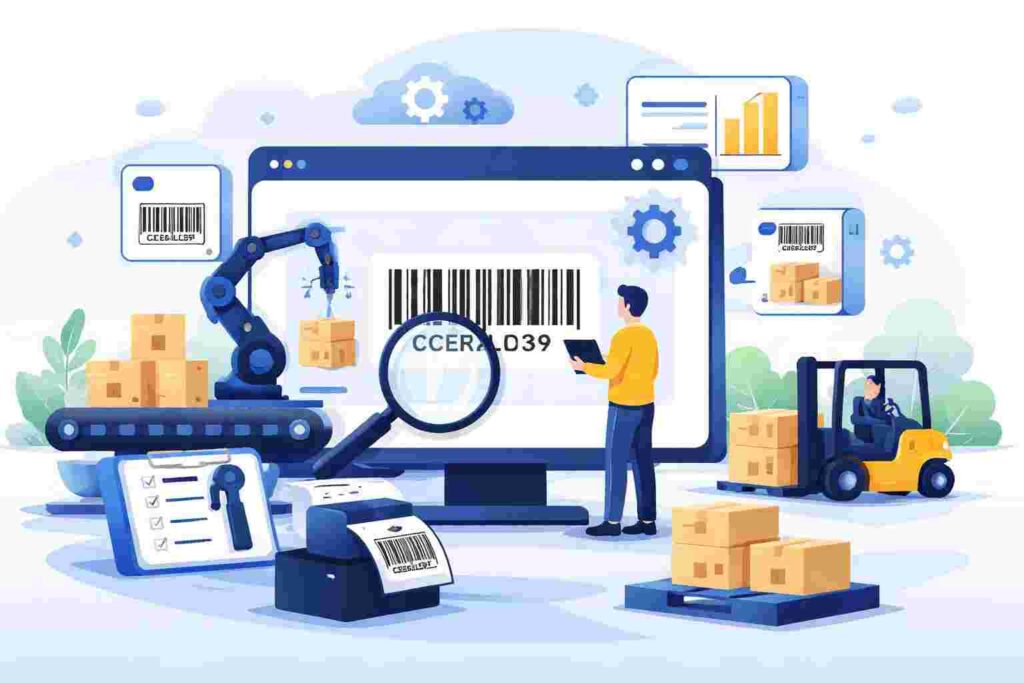
The barcode generator Code39 has emerged as a vital tool in various industrial applications, revolutionizing how businesses operate by enhancing efficiency and accuracy. By understanding the nuances of Code39 barcodes, their functionality, and their industrial applications, organizations can leverage this technology to drive significant improvements across their operations.
Understanding Code39 Barcodes
Definition of Code39
Code39 is a widely used, alphanumeric barcode symbology that encodes characters 0 through 9, A through Z (uppercase), and a few special characters including –, ., (space), $, /, +, and %. It can represent up to 43 characters and is favored for its simplicity and efficiency in encoding information.
Characteristics and Benefits
- Simple Alphanumeric Encoding: Code39 simply encodes numeric digits and upper-case letters, making it easy to read.
- Flexible Length: Code39 barcodes can be produced in a variety of lengths, which is beneficial for different application needs.
- High Compatibility: Works with both laser and inkjet printers, enhancing its usability in various environments.
- Readable by Various Scanners: Compatible with most barcode scanners, ensuring widespread adoption.
History of Barcode Technology
The inception of barcode technology can be traced back to the late 1940s when Joseph Woodland and Bernard Silver developed the first barcode system. However, it wasn’t until the 1970s that barcodes became widespread, especially with the creation of the Universal Product Code (UPC). Code39 gained popularity in the 1980s due to its versatility, especially in non-retail applications.
How Code39 Barcode Generators Work
Encoding Process
The encoding process for Code39 barcodes begins with translating the alphanumeric characters into a series of bars and spaces that represent each character. This enables barcode scanners to decode and retrieve the encoded information easily.
Required Software and Tools
- Barcode Generation Software: Tools like Barcode Generator Pro or Zint allow users to create custom Code39 barcodes.
- Printer: A high-quality printer that supports barcode printing is essential for optimal output quality.
- Scanner: A compatible barcode scanner is required to read the generated barcodes effectively.
- Database Integration: Software solutions should be able to integrate with existing databases for real-time updates and tracking.
Integration with Hardware
Code39 barcode generators must seamlessly integrate with various hardware components, including point-of-sale systems, inventory management software, and warehouse management systems. This integration facilitates real-time data exchange, improving operational efficiency.
Transforming Inventory Management with Code39
Warehousing Efficiency
Implementing Code39 barcodes in warehouses has dramatically improved operations. By tagging each item with a barcode, workers can quickly scan products during inventory checks, reducing manual entry errors and saving hours of labor time each week.
Manufacturing Streamlining
- Production Tracking: By assigning Code39 barcodes to components, manufacturers can track production processes and minimize waste.
- Quality Control: Barcodes can tie back to specific batches, allowing for efficient quality assurance.
- Faster Assembly Lines: Workers can utilize scanning systems to verify parts quickly, reducing downtime.
- Minimal Training Required: Staff can learn to use barcode scanners in a short time, further enhancing productivity.
Supply Chain Transparency
The transparency Code39 offers extends throughout the supply chain, enabling companies to conduct real-time tracking of goods. This adaptability supports proactive inventory management and helps prevent stockouts or overstock situations.
Strategic Advantages of Code39 in Logistics
Improved Shipping Accuracy
Logistics companies have found that utilizing Code39 barcodes significantly enhances shipping accuracy. By scanning each package during loading and unloading, businesses can ensure that the right items reach the right destinations, reducing costly errors and returns.
Reduced Labor Costs
- Automation Potential: Automation of scanning processes can reduce the manual labor force needed at loading docks.
- Efficiency Gains: Fast and accurate data collection systems decrease the time employees spend on shipping-related tasks.
- Training Savings: As mentioned, the simple technology requires less training, further lowering costs.
- Programmable Equipment: Many modern scanners can be programmed for specific features which cater to logistics needs, reducing setup time.
Enhanced Tracking Capabilities
By employing Code39 barcodes, logistics companies gain enhanced tracking capabilities, allowing them to monitor products at each stage of the supply chain. This insight aids in performance analyses and shipping forecasts.
Limitations of Code39: Risks and Considerations
Scanning Limitations
Despite its advantages, Code39 barcodes have limitations, particularly in environments with high volumes of scanning. Their wide spacing can lead to scanning challenges under certain conditions, as many scanners may struggle to read multiple codes quickly during high-speed operations.
Data Capacity Constraints
- Limited Character Set: With only 43 characters available, Code39 may not suffice for more complex data needs.
- No Support for Lowercase: Limitations in character representation mean brands looking to feature lowercase letters must seek alternatives.
- Redundant Information: Often requires additional information to accompany the barcode for full utility (e.g. item descriptions).
- Not Ideal for Global Standards: In certain cases, industries that require broader compatibility may find Code39 limiting.
Counterfeiting Risks
The simplicity of Code39 barcodes can sometimes make them susceptible to counterfeiting, as unauthorized parties can generate similar codes. Increased security measures are essential to safeguard against this risk.
Comparative Analysis of Barcode Types
Code39 vs. QR Codes
Code39 vs. Code128
Code39 vs. EAN-13
| Feature | Code39 | Code128 | QR Code | EAN-13 |
|---|---|---|---|---|
| Character Set | Alphanumeric + limited special | Alphanumeric + ASCII | Alphanumeric + Kanji + Binary | Numeric |
| Data Capacity | Low (43 characters) | High (over 100 characters) | Very High | 13 digits only |
| Readability | High with appropriate scanners | High, requires specific scanners | Ultra High with smartphones | High, commonly used in retail |
| Industries Used | Logistics, Manufacturing | Warehouse, Retail | Marketing, Consumer Products | Retail, E-commerce |
Statistics and Market Trends in Barcode Usage
Market Growth Rates
The barcode generation market is projected to grow from $2.25 billion in 2021 to $3.54 billion by 2026, at a CAGR of 9.8%. This upswing illustrates a growing recognition of the importance of barcode technology across industries.
Adoption Rates in Industries
- Logistics: Over 90% of logistics companies utilize some form of barcoding technology.
- Retail: Approximately 85% of retail businesses employ barcodes for inventory and sales management.
- Manufacturing: Barcode usage stands at 75% among manufacturing firms for tracking processes.
- Healthcare: 70% of healthcare providers have adopted barcoding for medication management.
Barcode Adoption Projections
As industries increasingly realize the benefits of barcodes, the adoption rate is expected to rise, with predictions stating that by 2025, 90% of manufacturers will incorporate barcoding into their operations. Such trends point toward a future where barcode technology remains integral in driving efficiency.
Real-World Success Stories with Code39
Case Study in Retail
A leading retail chain implemented Code39 barcodes across its product lines and experienced a 20% reduction in inventory discrepancies within the first year. By allowing cashiers to scan items for pricing, the store also reported a 15% increase in checkout efficiency. The accuracy of their inventory management improved significantly, leading to better stock control and satisfied customers.
Case Study in Manufacturing
In a manufacturing setup, the implementation of Code39 barcodes allowed the company to reduce assembly line errors by 30% within six months. The easy identification of components used in products enabled workers to minimize waste and improve production output. Over the course of the year, the company reported a significant portion of cost savings, attributed to reduced rework and downtime.
Case Study in Logistics
A logistic firm enhanced its shipment accuracy by utilizing Code39 barcodes, achieving a record 95% accuracy in order fulfillment. The firm reduced shipping errors across multiple distribution centers, leading to an overall decrease in logistics costs by 25%. Their ability to track shipments in real-time also improved customer satisfaction rates.
Future Trends for Barcode Generators
Integration with IoT
As the Internet of Things (IoT) continues to evolve, integration with barcode technology, particularly Code39, is expected to enhance tracking capabilities across various sectors. This synergy will facilitate real-time data sharing and improve operational efficiency.
Advancements in Scanning Technology
- Speed Enhancements: Future scanning technologies will likely focus on speed, enabling faster and more accurate data capture.
- Increased Compatibility: Advancements may lead to broader compatibility with various barcode formats.
- Advanced Error Correction: New technologies could focus on reducing scanning errors even further.
- Mobile Solutions: Mobile scanning applications, especially for Code39, are expanding, allowing businesses to take scanning on-the-go.
Future Barcode Standards
As industries push for standardization, new barcode formats may emerge that build on the strengths of Code39 while addressing its limitations. The development of future barcode standards is set to redefine data encoding, leading to more efficient inventory management processes.
Frequently Asked Questions about Code39 Barcodes
What industries commonly use Code39?
Code39 barcodes are commonly utilized in logistics, manufacturing, healthcare, and retail. Their versatile and alphanumeric encoding capabilities create a multitude of applications. For example, manufacturers use them for tracking inventory while retail stores utilize them for pricing and sales management.
Can Code39 barcodes be used in mobile applications?
Yes, Code39 barcodes can be effectively used in mobile applications. Many scanning applications available on smartphones can read Code39 barcodes, making it easy for businesses to utilize mobile solutions for inventory management, payment processing, and more. This integration enables companies to streamline operations and improve accessibility.
What are the best practices for generating Code39 barcodes?
To ensure effective generation of Code39 barcodes, it is crucial to follow certain best practices. These include choosing the correct printing resolution, maintaining white space to avoid reading errors, ensuring the correct size is used for logistics dynamics, and testing the barcode with various scanners before implementation to secure its functionality.
How do I ensure my Code39 barcodes are scannable?
To maximize the scannability of Code39 barcodes, it is advisable to conduct regular system diagnostics with scanning equipment, verify alignment and contrast on printed codes, and employ new printing techniques to maintain quality. Additionally, testing barcodes in various environments helps safeguard against environmental scanning issues.
What are the cost implications of implementing Code39?
The costs associated with implementing Code39 can include software purchasing, barcode printers, and integration into existing systems. However, the cost savings realized from improved inventory accuracy, reduced labor costs, and operational efficiencies can far exceed these initial investments. Businesses typically see a return on investment in a short time frame.
How does Code39 compare to other barcode formats?
When comparing Code39 to other barcode formats, such as Code128 or QR codes, each has its strengths and weaknesses. Code39 is simpler and may suit most applications that require basic data. In contrast, other formats can handle greater data capacity and complexity. Choosing the correct barcode type largely depends on the specific application requirements.
Conclusion: Unlocking Efficiency with Code39
Code39 barcodes have proven to be a game changer across various industries, offering efficiency, accuracy, and trackability in processes from manufacturing to logistics. By utilizing barcode generator Code39, companies can streamline their operations, leading to better inventory management, reduced costs, and increased customer satisfaction. As technology continues to evolve, Code39 will remain a significant tool in the industrial landscape, unlocking newfound potential for businesses looking to optimize their processes.