
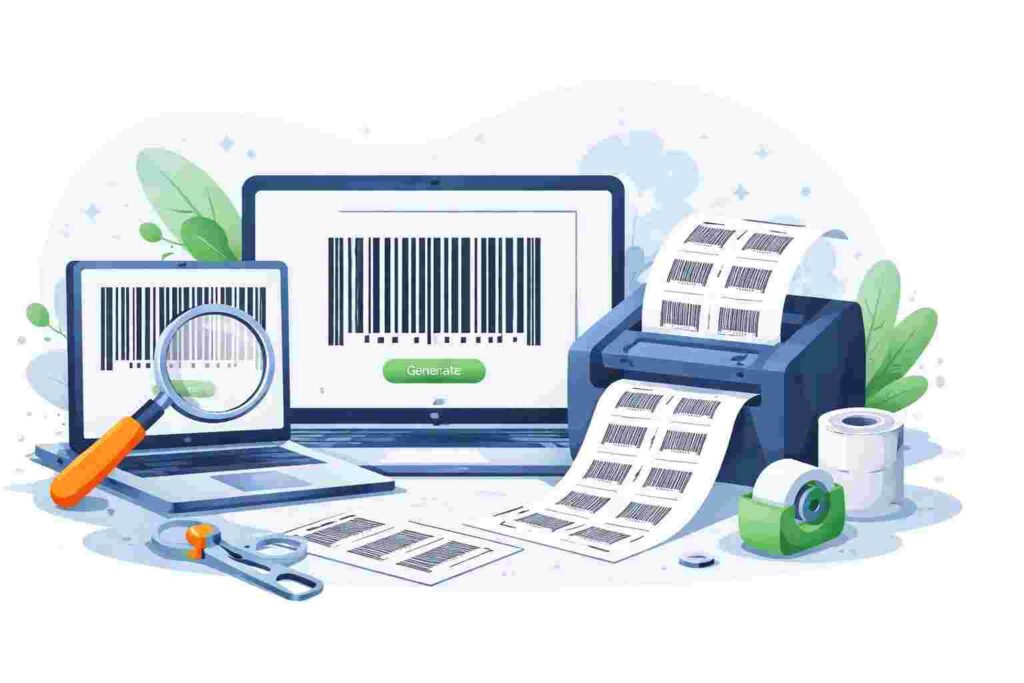
In today’s fast-paced business environment, the use of barcode generator printables is becoming increasingly essential across various industries. These tools not only streamline processes but also provide significant versatility in managing product information and inventory levels. From retail to logistics, the applications of barcode technology are vast and impactful. This article aims to delve into the different facets of barcode generation and its relevance to improving operational efficiency.
Understanding Barcode Generation
Before diving into the practical applications of barcode printables, it’s important to understand the fundamentals of barcode generation. Barcodes serve as a critical technology in data management, allowing businesses to track products efficiently. Here we explore the history, types, and components of barcodes.
History of Barcodes
The concept of barcodes dates back to the 1940s, but it wasn’t until the 1970s that they gained prominence thanks to the invention of the UPC (Universal Product Code). Early implementations aimed to automate checkout processes in grocery stores, revolutionizing retail operations. Over time, barcode technology has evolved, leading to the adoption of various types of barcodes that cater to specific industry needs.
Types of Barcodes and Their Uses
- 1D Barcodes: These are linear barcodes used mainly in retail for product identification.
- 2D Barcodes: Includes QR codes, which store more information and are used in marketing, ticketing, and more.
- Data Matrix: Often employed in manufacturing and logistics, optimizing space in item labeling.
- PDF417: A stacked linear barcode used in shipping and packaging.
- Codabar: Typically used by libraries, blood banks, and in the transportation industry.
Components of a Barcode
At its core, a barcode consists of several key components:
- Quiet Zone: The blank space surrounding a barcode that helps scanning devices detect the code easily.
- Bars and Spaces: The varying widths of bars and spaces represent different characters.
- Encoding: The specific pattern that translates to information about the product.
- Check Digit: An extra digit calculated to prevent errors in scanning.
How Barcode Generators Work
Understanding how barcode generators function is pivotal for ensuring the proper implementation of barcode technology. This section provides insights into the mechanisms behind barcode generation, including software and hardware solutions.
Software vs. Hardware Barcode Generators
Barcode generators can be categorized into software and hardware types. Software generators are applications that create barcodes based on input data and can often print directly to labels or sheets. On the other hand, hardware generators are dedicated devices that produce barcode labels on the spot, suitable for high-volume needs. Both have their advantages, depending on the scale and scope of business operations.
Encoding Data in Barcodes
The encoding process transforms data into a format that can be represented by a barcode. This encoding can vary based on the type of barcode being used. For example, numeric data might require different encoding techniques than alphanumeric data. Barcodes ensure that the data can be efficiently scanned and interpreted by devices, allowing for seamless information retrieval.
Scanning Technologies
The technology used for scanning barcodes is essential for their functionality. Common scanning technologies include:
- Laser Scanners: Ideal for scanning 1D barcodes at high speeds.
- Camera Scanners: Used for scanning 2D barcodes, such as QR codes, using digital cameras.
- Omnidirectional Scanners: Capable of reading barcodes at any angle.
- Mobile Scanners: Compatible with smartphones for quick scans.
Barcode Printing Techniques for Business
Various industries can greatly benefit from implementing barcode generator printables. Understanding these applications can help businesses optimize their operations significantly.
Retail Applications
In the retail sector, barcodes are primarily used for inventory management, pricing, and point-of-sale transactions. Retailers can track product movements, manage stock levels in real-time, and enhance the checkout process, leading to a better customer experience.
Inventory Management Impact
Effective inventory management hinges on accurate tracking of goods. Barcode printables allow businesses to maintain precise records, reduce errors, and streamline inventories. Companies can execute inventory counts faster and with greater accuracy, ultimately leading to more informed business decisions.
Logistics and Shipping Solutions
Logistics companies utilize barcode technology for tracking shipments and managing shipping documentation. Barcodes enhance visibility throughout the supply chain by providing real-time data, which can improve delivery times and ensure customer satisfaction.
Strategic Advantages of Using Printable Barcodes
Implementing barcode generator printables comes with numerous strategic advantages that can significantly impact a business’s performance.
Cost Efficiency
One of the primary reasons businesses adopt barcoding systems is the potential for cost savings. By minimizing manual data entry, companies can reduce labor costs and errors associated with inventory management. Additionally, the decrease in lost or misplaced items leads to lower replenishment costs.
Improved Accuracy and Speed
A barcode system enhances the accuracy of data entry processes and speeds up transactions. Businesses report significant decreases in scanning errors and mislabeling with barcode implementation, which also allows employees to focus on more strategic tasks instead of repetitive manual input.
Enhanced Customer Satisfaction
With faster checkouts and improved inventory accuracy, customer satisfaction tends to increase. When customers receive their orders promptly and without issues, it leads to fewer complaints and repeat business. Ultimately, adopting barcode technology can give businesses a competitive edge.
Limitations and Risks of Barcode Printables
While there are numerous benefits associated with barcode generator printables, it is essential to be aware of the limitations and risks involved.
Printing Quality Concerns
The quality of printed barcodes is critical. Low-quality prints can lead to scanning difficulties, which can hinder operations. Ensuring that printers are regularly maintained and using high-quality ink and materials is vital for effective barcode production.
Compatibility Issues
Not all barcode formats are universally compatible with scanners. Businesses need to verify that the barcodes they generate are readable by the systems they plan to use, which may require additional investment in compatible hardware.
Security Vulnerabilities
Barcodes can become a point of exploitation if not secured properly. Attackers may manipulate barcode information to defraud or mislead users. It is crucial for businesses to implement security layers where sensitive data is involved.
Evaluating Barcode Generator Options
When looking for a barcode generator, businesses have a plethora of options to consider. Each generator comes with its unique features and pricing models. Below is a comparison table that outlines several popular barcode generators and their distinct features.
| Barcode Generator | Features | Pricing | User Ratings |
|---|---|---|---|
| BarcodeGenerator.com | Online tool, Customizable barcodes, Batch processing | Free for basic use, $50/month for premium | 4.5/5 |
| BarTender | Enterprise solutions, Extensive format support, Cross-platform | Starts at $299 | 4.7/5 |
| Visualead | QR code generator, Design options, Analytics tracking | Free basic version, $20/month for pro | 4.3/5 |
| QR Code Generator | User-friendly, Custom URLs, Tracking | Free for basic features, Plans from $5/month | 4.6/5 |
Pricing Analysis
When comparing barcode generators, businesses should consider the costs in relation to the features offered. Free versions may suffice for small operations, while larger enterprises might find value in more robust, paid solutions. Analyzing the total cost of ownership, including potential upgrades and additional features, is crucial for making an informed choice.
User Feedback and Ratings
Before settling on a barcode generator, examining user feedback is essential. Online reviews can shed light on the actual performance of the tool and its usability. Look for platforms where users rate their experiences to gauge satisfaction levels accurately.
Statistics and Market Trends in Barcode Usage
Current statistics reveal the growing importance of barcode technology in various industries. As businesses increasingly rely on data management systems, the demand for barcode solutions continues to rise.
Market Growth Rates
The global barcode market is expected to grow from $1.55 billion in 2020 to $2.96 billion by 2026, reflecting a CAGR of approximately 11.65% during this forecast period. This growth signifies the critical role barcodes play across different sectors.
Adoption Statistics by Industry
Studies indicate that around 93% of retailers have implemented barcode systems for inventory management. Furthermore, 80% of logistics companies utilize barcodes for tracking purposes. Such statistics underscore the essentiality of barcode adoption in enhancing business operations across various domains.
Future Forecasts
Looking ahead, the barcode technology industry is expected to continue growing, fueled by innovations in mobile scanning and integration with IoT devices. Companies that embrace these advancements will likely enjoy greater efficiencies and customer satisfaction.
Real-World Success Stories of Barcodes
Many companies have successfully adopted barcode generator printables to optimize their operations. Here are a few case studies showcasing these outcomes.
Case Study 1: Retail Chain Results
A national retail chain implemented a comprehensive barcode system for inventory management. Before adoption, they faced challenges with stock mismanagement, leading to a 20% loss in sales due to stockouts. After integrating barcode technology, they were able to reduce stock discrepancies by 85% and recover approximately 10% in lost sales within six months.
Case Study 2: Warehouse Efficiency
A large warehouse operation transitioned to barcode printables for tracking incoming and outgoing shipments. Previously, manual tracking led to a 30% increase in order fulfillment errors. Once barcodes were used, they achieved a 50% reduction in such errors, resulting in faster processing times and higher customer satisfaction ratings.
Case Study 3: Shipping Cost Reduction
A shipping company turned to barcodes for tracking packages. Before the implementation, they suffered from delays that led to an estimated $100,000 in annual losses. Following the transition to barcode tracking, they enhanced delivery times and found a cost reduction of 25% in operational expenses, significantly boosting their profit margins.
The Future of Barcode Technology
The barcode industry is on the brink of further transformation, driven by technological advances. Key trends include the integration of barcode systems with the Internet of Things (IoT) and enhanced mobile scanning capabilities.
Integration with IoT
As IoT devices proliferate, their integration with barcode technology will revolutionize data collection and analysis. Businesses will be able to utilize real-time data from connected devices, providing deeper insights into inventory management and customer behavior.
Advancements in Mobile Scanning
As smartphones become more powerful, mobile scanning technology is expected to improve significantly. Enhanced scanning capabilities will allow users to scan barcodes faster and more accurately, making transactions smoother and more efficient for businesses and consumers alike.
Predictive Analytics in Barcoding
With advancements in machine learning and artificial intelligence, businesses will increasingly employ predictive analytics to anticipate trends based on barcode data. Analyzing purchasing patterns and inventory levels will allow for better forecasting and decision-making.
Frequently Asked Questions about Barcode Generators
In this section, we address common questions regarding barcode generator printables.
What is a barcode generator?
A barcode generator is a tool, either software or hardware, that creates barcodes based on specific information inputs. These generators facilitate the creation of various barcode formats and allow users to customize their designs for specific applications, enhancing usability across diverse business sectors.
These tools are essential for businesses looking to implement barcode systems for inventory management, sales tracking, and more. They streamline operations, reduce human error, and improve overall efficiency.
How do I choose the right barcode type?
Choosing the right barcode type depends on several factors, including the amount of data you want to encode, the applications involved, and the industry standards. For instance, if you need to encode a large amount of data, 2D barcodes like QR codes may be suitable.
Additionally, consider the intended use. Retail environments commonly use 1D barcodes, while industries such as manufacturing may benefit more from 2D codes like Data Matrix or QR codes. Always assess your specific needs before making a decision.
Can I print barcodes at home?
Yes, you can print barcodes at home using standard printers, provided you have the necessary software or templates. Many online tools allow you to generate barcode images that you can print directly onto labels or paper. Make sure that you test the printed barcodes with a scanner to ensure they are scannable prior to use.
Utilizing compatible label sheets designed for barcode printing also enhances the quality of the final product. Maintaining printer quality is crucial to ensure that barcodes remain readable during use.
What materials are best for barcode printing?
The best materials for barcode printing depend on the application and the environment in which the barcodes will be used. For instance, paper labels are sufficient for retail tags, while synthetic materials may be more appropriate for products exposed to moisture or heavy handling.
Choosing durable materials ensures that the barcodes remain intact throughout their lifecycle, preventing scanning issues caused by wear and tear. Always consider the settings in which the labels will be applied to make an informed choice.
Are barcodes unique for every product?
Barcodes can be unique for every product if structured correctly. Generally, businesses will assign a unique identifier for each product variant, creating a distinct barcode. This practice is essential for inventory management, assurance of accuracy in supply chain operations, and facilitating customer transactions.
However, reusing barcodes across different products can cause confusion and errors, so it’s best to maintain a systematic approach to barcode assignment to ensure uniqueness.
How do I troubleshoot barcode scanning issues?
Troubleshooting barcode scanning issues can be approached in several ways. Common problems include poor print quality, incorrect barcode type, and scanner compatibility. Start by visually checking the barcode for clarity and ensuring optimal print quality to facilitate accurate scanning.
If issues persist, verify that the scanner is compatible with the barcode format being used. Testing other barcodes can help isolate whether the issue is with the barcode itself or the scanner’s functionality. Maintaining both barcodes and scanning equipment is vital for smooth operations.
Conclusion
In conclusion, the implementation of barcode generator printables offers myriad benefits across various industries, from enhancing inventory management to boosting customer satisfaction. Understanding how barcode generation works, the printing techniques available, and the strategic advantages can empower businesses to leverage this technology effectively.
As we look to the future, continuing innovations in barcode technology promise to redefine data management and efficiency across sectors. For businesses seeking growth and operational excellence, adopting barcode solutions is not just a choice; it’s a necessity.