
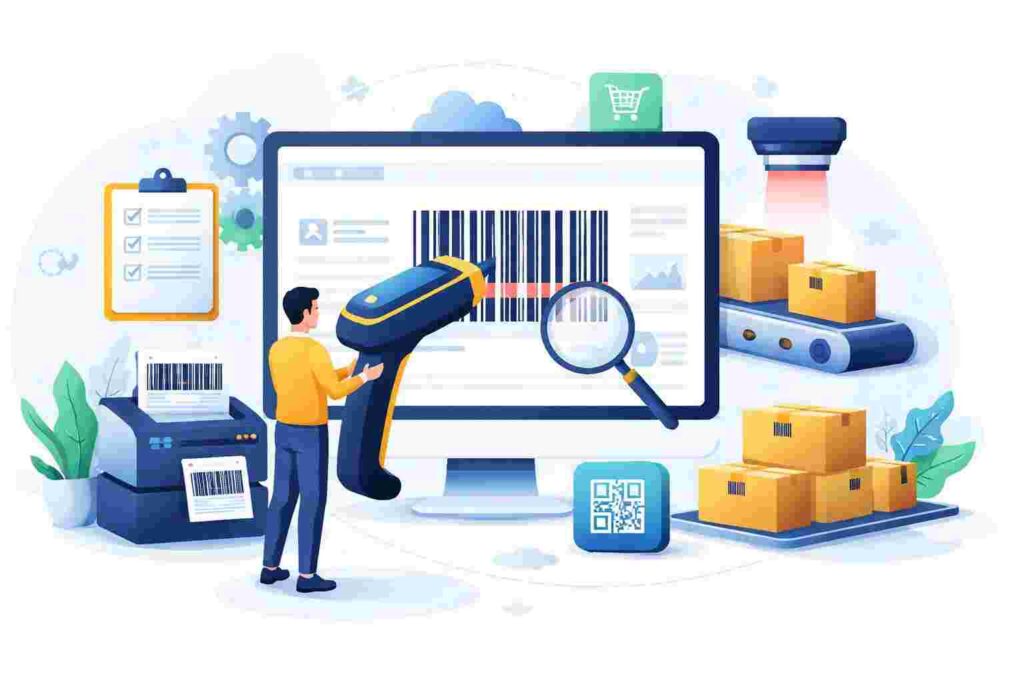
In today’s fast-paced business environment, the barcode generator scanner has become indispensable across various industries. These tools streamline operations, enhance inventory management, and improve customer satisfaction. Understanding their function is key to leveraging their potential effectively. In this article, we will explore the significance of barcode generator scanners, detailing their technology, applications, advantages, and the future of this evolving field.
Understanding Barcode Technology
To fully appreciate the capabilities of a barcode generator scanner, it’s essential to grasp the underlying technology of barcodes themselves. Barcodes are graphical representations of data that can be easily scanned and read by electronic devices. This section dives into the types, functioning, and key features of barcodes.
Types of barcodes
- 1D Barcodes: Standard linear barcodes used widely in retail.
- 2D Barcodes: Includes QR codes and Data Matrix codes, capable of storing more complex data.
- RSS: Reduced Space Symbology, designed for smaller labels.
- PDF417: Stacked linear barcode used in identification cards and transport applications.
- Aztec: A 2D matrix barcode useful for mobile ticketing.
How barcodes work
When a barcode scanner reads a barcode, it captures the reflected light from different widths and spaces of the bars. This information is converted into a digital signal, which the scanner’s decoding software interprets. Each type of barcode employs a specific set of rules for encoding data, which is why compatibility between scanners and barcodes is crucial.
Key features of barcode generators
- Customizability: Ability to create customizable barcodes for various applications.
- Multiple Formats: Support for different barcode formats based on industry standards.
- Integration Capabilities: Easily incorporated into existing systems.
- User-Friendly: Simplifies the process of generating barcodes without extensive technical knowledge.
- Batch Generation: Capability to create multiple barcodes simultaneously, improving efficiency.
The Technology Behind Barcode Scanners
Understanding how barcode scanners operate reveals the intricacies of their function and performance. This section covers the scanning technologies, decoding methods, and software integration that define barcode scanning.
Scanning technologies (laser, CCD, imaging)
- Laser Scanners: Utilize laser beams to read barcodes, effective for long-range scanning.
- CCD Scanners: Use an array of small light sensors, ideal for short-range scanning.
- Imaging Scanners: Capture images of barcodes and decode them, providing versatility across various barcode formats.
- Omnidirectional Scanners: Capable of reading barcodes from any angle, enhancing user experience.
- Handheld vs. Fixed Scanners: Handheld scanners provide portability, while fixed scanners are often used in point-of-sale environments.
Decoding processes
The process of decoding involves transforming the scanned image into a readable format through software. This includes analyzing the pattern of black and white spaces to reconstruct the original data encoded in the barcode. Efficient decoding is vital for seamless operations.
Integration with software systems
Barcode scanners often integrate with inventory management and point-of-sale systems, allowing for real-time data capture and inventory updates. This ensures accurate tracking of items, reducing human errors and optimizing stock levels.
Industry-Specific Applications of Barcode Scanners
As industries evolve, barcode scanning technologies adapt to meet unique requirements. This section illustrates specific applications that demonstrate the impact and return on investment (ROI) of barcode scanning.
Retail and inventory management
In retail, barcode scanners streamline the checkout process and enhance inventory accuracy. Scanning barcodes at checkout ensures that prices are correctly applied, while inventory management systems can monitor stock levels in real time, minimizing discrepancies.
Healthcare applications
Barcode technology in healthcare enables more efficient administration of medications by ensuring that the right patient receives the correct dose at the right time. Patient wristbands equipped with barcodes allow for reliable tracking within hospitals and clinics.
Logistics and supply chain optimization
In logistics, barcode scanners facilitate tracking and tracing of items through the supply chain, enhancing visibility and accountability. This leads to reduced cycle times and increased operational efficiency within warehouses and during transportation.
Strategic Advantages of Optimizing Barcode Scanners
Improving scanning processes not only benefits individual operations but also creates broader strategic advantages. This section outlines these benefits and their implications.
Improved accuracy and efficiency
- Reduced human error: Automated scanning reduces the chance of mislabeling or data entry mistakes.
- Time savings: Fast scanning speeds up transactions and warehouse processes.
- Data integrity: Accurate readings ensure correct information is recorded.
- Streamlined operations: Integration with other systems promotes a more cohesive workflow.
- Better inventory control: Real-time tracking reduces overstock and stockouts.
Cost-saving benefits
Investing in barcode technology often leads to significant cost reductions. By minimizing lost sales due to inaccuracies and reducing labor costs associated with manual inventory counting, businesses can substantially increase their bottom line.
Enhanced customer satisfaction
A smoother checkout experience fosters customer loyalty. When customers find that their purchases are processed quickly and accurately, they are more likely to return. Retailers also benefit from fewer complaints associated with mispricing or inventory shortages.
Challenges and Risks Associated with Barcode Technology
While barcode technology has numerous advantages, it’s crucial to recognize the challenges it can present. This section discusses potential hurdles and considerations.
Common scanning errors
- Physical damage: Scratched or dirty barcodes can lead to failed scans.
- Environmental factors: Poor lighting or reflective surfaces can interfere with scanning operations.
- Incorrect barcode format: Using the wrong type of barcode for the scanner can result in reading errors.
- Operator error: Mishandling of scanners can affect accuracy.
- Software glitches: Issues with decoding software can also lead to inaccuracies.
Security vulnerabilities
Barcodes are often vulnerable to tampering and counterfeiting. Fraudulent barcodes can mislead inventory systems, resulting in significant financial repercussions. Organizations must implement strict protocols to ensure the integrity of their barcode systems.
Dependence on technology
Over-reliance on barcode technology can lead to vulnerabilities if systems fail. Organizations must have backup processes and contingency plans in place to mitigate disruptions should scanning systems encounter issues.
Comparative Analysis of Barcode Scanning Solutions
Understanding the various barcode scanning solutions available in the market helps businesses choose the right tools for their needs. This section evaluates different scanner options and provides a detailed comparison.
Feature comparison chart
| Scanner Type | Scanning Speed | Range | Connection Type | Cost |
|---|---|---|---|---|
| Laser | Very fast | Long range | Wired/Wireless | $150 – $300 |
| CCD | Fast | Short to medium range | Wired | $100 – $200 |
| Imaging | Medium | Variable (depends on model) | Wired/Wireless | $200 – $400 |
| Omnidirectional | Fast | Short to long range | Wired/Wireless | $250 – $500 |
| Handheld | Medium | Short | Wireless | $100 – $250 |
As illustrated, various barcode scanners cater to distinct needs, with trade-offs between speed, range, and cost. By understanding these features, businesses can align their choice with operational demands.
User feedback and ratings
Gathering user feedback is essential in discerning the effectiveness of barcode scanners. Many users report that laser scanners excel in speed and accuracy in retail settings, while imaging scanners are praised for their versatility. Evaluating reviews can provide insights into real-world performance and help businesses make informed decisions.
Statistics and Market Trends in Barcode Technology
Staying informed of market statistics and trends drives strategic decisions. This section highlights key data points regarding barcode technology and its growth.
Market growth projections
- The global barcode scanner market is projected to reach $4.9 billion by 2025.
- Expected CAGR of the barcode scanning market from 2020 to 2025 is 8.2%.
- Increased demand in e-commerce has spurred barcode adoption.
- Retail and logistics remain the largest customers of barcode solutions.
- Integration of advanced technologies such as IoT is anticipated to drive growth further.
Adoption rates across industries
According to a recent study, over 90% of retailers currently utilize barcode scanning technologies to manage inventory processes. Conversely, healthcare’s adoption rate stands at around 80%, with significant growth potential as automation becomes more prevalent in patient care.
Revenue statistics from barcode solutions
The revenue from barcode solutions in the logistics sector has seen a remarkable rise, hitting approximately $2 billion last year alone. This growth reflects the expanding role of technology in network optimization across supply chains.
Case Study: Success Stories in Barcode Implementation
Learning from real-world examples provides invaluable insights into the potential of barcode scanning. This section presents a case study that illustrates the tangible benefits of barcode implementation.
Company profiles and their barcode projects
Consider Company X, a mid-sized retail chain that implemented a comprehensive barcode scanning system. They adopted a mixture of handheld and fixed scanners to streamline their inventory management and checkout processes.
Before and after metrics
Before implementing barcode scanners, Company X suffered from an inventory discrepancy rate of approximately 15%. After using barcode technology, this figure dropped to around 2%, showcasing a massive improvement in accuracy. Moreover, their overall checkout time reduced by 20%, enhancing customer satisfaction and boosting sales.
Lessons learned
One critical lesson from Company X’s experience is the importance of training staff adequately to use new systems. Ensuring employees are familiar with the technology significantly reduces scanning errors and enhances overall efficiency.
Future Trends in Barcode Scanner Technology
Looking ahead, barcode scanning technology is set to evolve dramatically. This section speculates on future advancements and the directions the industry might take.
Advancements in scanning accuracy
Future innovations aim to improve scan accuracy, reducing misreads caused by environmental factors. Enhancements in optics and sensor technology could lead to barcode scanners capable of interpreting damaged or poorly printed codes.
Integration with AI and IoT
With the rise of the Internet of Things (IoT), barcode scanners will increasingly be integrated with AI systems. This collaboration may enable predictive analytics for inventory management and automated restocking processes, optimizing overall operational efficiency.
Predicted changes in consumer behavior
As consumers become more mobile and connected, demand for fast and accurate processing will increase. Therefore, businesses will need to invest in advanced scanning technologies that can adapt to changes in consumer expectations and shopping behaviors.
Frequently Asked Questions About Barcode Scanners
What is a barcode generator?
A barcode generator is a tool or software that creates barcodes based on specific data input. These barcodes can be in various formats (like QR codes or UPCs) and can be customized for different applications. Typically, users can select the barcode type and input the necessary data, allowing the generator to produce a scannable code.
Many barcode generators also offer batch generation features, enabling users to create multiple barcodes simultaneously. This scalability is crucial for businesses that require high volumes of unique codes for inventory or product tracking.
How do I choose the right barcode scanner?
Selecting the appropriate barcode scanner involves considering several factors, including the types of barcodes you intend to scan, the environment in which the scanner will be used, and the desired connectivity options. For instance, retail settings may benefit from high-speed laser scanners, while warehouses could require robust imaging scanners for a variety of barcode formats.
Additionally, evaluating features such as scanning range, durability, and integration capabilities with existing systems will help streamline the selection process. Always consider consulting with industry experts or conducting trials to find a suitable match for your specific needs.
Can barcode scanners read multiple barcode types?
Yes, many modern barcode scanners are designed to read various types of barcodes, including 1D, 2D, and even more advanced formats like PDF417 and Aztec codes. This capability enables businesses to use a single scanning solution across multiple applications, maximizing return on investment.
Conversely, some scanners are specialized for certain barcode types, so it’s important to verify compatibility before investing. Operational needs and industry standards will guide this decision efficiently.
What industries benefit most from barcode scanning?
Industries that see significant benefits from barcode scanning include retail, healthcare, manufacturing, and logistics. In retail, barcode scanners enhance inventory management and checkout processes. In healthcare, they ensure accurate medication administration and patient tracking.
Logistics organizations leverage barcode technology for effective tracking and inventory control, while manufacturing sectors utilize barcodes for quality assurance and supply chain management. As barcode technology continues to evolve, its applications are expanding into new areas.
How does barcode scanning improve efficiency?
Barcode scanning drastically improves efficiency through increased speed and accuracy in data entry. Automated processes minimize human error, resulting in more reliable inventory counts and faster checkout times. This efficiency is crucial for meeting growing consumer demands and ensuring smooth operations.
Moreover, integrating barcode scanners with inventory management software provides real-time data insights, further empowering organizations to optimize stock levels and reduce carrying costs. Consequently, businesses experience a smoother workflow, elevating overall productivity.
What are the costs associated with barcode systems?
The costs of barcode systems can vary widely depending on the type of equipment, software solutions, and the scale of implementation. Basic handheld scanners may cost as low as $100, while sophisticated imaging scanners can exceed $400. Additionally, businesses must account for software license fees and potential integration costs with existing systems.
While initial investments can be significant, the long-term cost savings usually justify the expenditure through improved efficiency and accuracy. Organizations should conduct a cost-benefit analysis to identify the best systems for their operational needs.
Conclusion: The Future of Barcode Generators and Scanners
The evolution of barcode generator scanners showcases their importance across industries. As technology progresses, the systems governing these tools will become increasingly sophisticated, leading to enhanced functionality and adaptability. Continuous optimization remains vital to achieve the best results against industry challenges.
In summary, staying informed about barcode technology and implementing strategic optimizations can lead to improved operational success. As businesses navigate this evolving landscape, embracing advancements will be key to maintaining competitive advantages and driving growth in the future.