
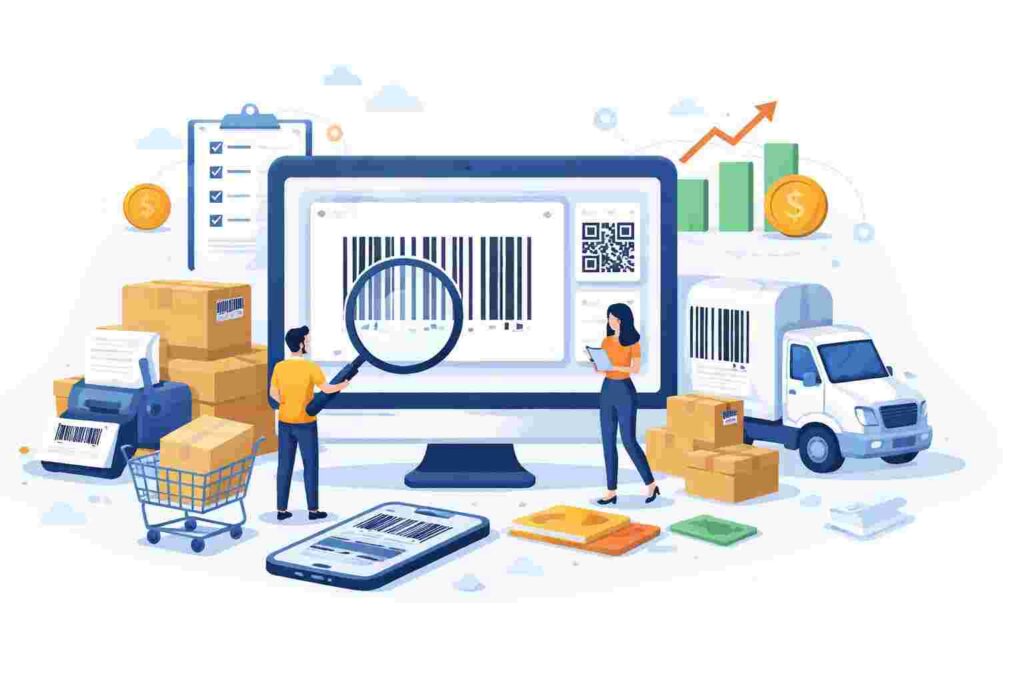
In today’s fast-paced business environment, efficiency is crucial for maintaining a competitive edge. One of the most effective tools for achieving this efficiency is a barcode generator service. These services allow businesses to create unique barcodes that can be used for a myriad of operations, thus streamlining various processes. This article dives deep into the world of barcode generator services, exploring 11 smart use cases that demonstrate how they can significantly enhance business operations.
Understanding Barcode Generator Services
Before diving into specific use cases, it’s essential to first understand what barcode generator services are, how they work, and the core features they offer to businesses.
Types of Barcodes
- 1D Barcodes: Standard linear barcodes used mainly in retail.
- 2D Barcodes: QR codes and Data Matrix codes that can store more data.
- HANDBAR codes: Specialized codes for healthcare and pharmaceuticals.
- Reserved codes: Often used in logistics for tracking and shipping.
- Customizable Barcodes: Unique symbols created for specific business needs.
How Barcode Generators Work
Barcode generators utilize algorithms for data encoding to translate product information into a scannable format. Upon input of data, the generator creates a visual representation that scanners can read. These services often come with customizable options to alter dimensions, colors, and formats to meet branding requirements. Importantly, many platforms allow users to download their barcodes in various file types, which can be integrated into labeling systems or printed directly.
Key Features of Barcode Generator Services
- User-friendly Interface: Allows users with minimal technical skills to create barcodes.
- Batch Processing: Enables the creation of multiple barcodes simultaneously.
- Integration Capabilities: Pairs seamlessly with inventory and sales systems.
- Custom Designs: Supports creative branding elements in barcode design.
- Analytics Support: Provides data insights from scans for inventory control.
Technical Aspects of Barcode Generation
Diving deeper, the technical workings behind barcode generation can significantly impact how businesses implement these tools. Let’s explore how barcode generation works technically and how it integrates into existing systems.
Data Encoding Techniques
Different encoding schemes like Code 128, UPC, and EAN have been standardized for various industries, allowing for a diverse range of applications. The choice of encoding depends on the amount of data and specific requirements of the scanning system. Typically, a barcode consists of a series of black and white lines that are read by optical scanners, which decode the data into a readable format.
Integration with Inventory Management Systems
Many businesses find that integrating barcode generator services with their inventory management systems enhances tracking and accountability. This integration allows for real-time inventory updates, efficient stock management, and the ability to manage supply chain logistics actively. By scanning barcodes at different touchpoints, businesses can gain an accurate overview of stock levels and item locations, which are crucial for operational efficiency.
QR Codes vs. Traditional Barcodes
- Data Capacity: QR codes can store significantly more information than traditional barcodes.
- Scannability: QR codes can be scanned from any angle compared to linear barcodes.
- Versatility: QR codes can embed URLs, text, images, or other data.
- Engagement: QR codes drive customer interaction with promotional content.
- Cost: Both types of codes are generally inexpensive to generate, but QR codes require less physical scanning space.
Impact of Barcode Technology on Retail Industry
Within the retail sector, barcode generator services have led to significant transformations. This section will share insights into how barcode technology enhances retail operations, leading to measurable impacts.
Inventory Management
Modern retail operations rely heavily on barcode technology for effective inventory management. Barcode systems streamline the tracking process, enabling businesses to know stock levels in real time. Retailers using barcode systems report an average inventory accuracy of 95%, leading to better stock turnover and reduced carrying costs. With optimized inventory levels, retailers can meet customer demands without overstocking.
Customer Experience Enhancement
With quick scanning capabilities, barcodes reduce waiting times at checkout, directly improving customer satisfaction. Retail transactions that utilize barcodes are typically completed 50% faster than manual entry processes. Furthermore, barcode scanning facilitates loyalty programs and instant promotions, enhancing the overall shopping experience.
Operational Efficiency Increases
- Reduced operational costs through automation of manual tasks.
- Streamlined logistics leading to faster market responses.
- Minimized errors in transactions, improving overall service quality.
- Enhanced data collection for performance analytics and diagnosis.
- Increased workforce productivity by allowing employees to focus on sales rather than inventory tracking.
Leveraging Barcodes in Manufacturing
In the manufacturing realm, barcode generator services take on a critical role, enhancing production processes. Here’s how.
Supply Chain Management
Barcodes drastically improve supply chain efficiency, with the ability to track components and finished goods throughout production processes. Companies that incorporate barcode technology into their supply chain have reported up to a 30% reduction in delays due to better tracking and management of inventory levels. Scanning products at different stages allows for necessary adjustments to be made in real time, ensuring production stays agile.
Quality Control Processes
In manufacturing, maintaining quality is paramount. Barcode systems track products through quality checkpoints, ensuring that they meet set standards. This reduces the likelihood of defects and enables timely recalls should issues arise. By integrating barcode scanning with quality control processes, manufacturers can detect issues early, resulting in up to a 20% reduction in faulty products reaching the market.
Production Tracking
- Enables real-time monitoring of production cycles and leads to improved scheduling.
- Facilitates accurate reporting on workforce efficiency.
- Provides visibility into production bottlenecks, enhancing workload distribution.
- Improves material handling through easy access to inventory data.
- Optimizes machinery usage reducing downtime.
Strategic Advantages of Barcode Implementations
Beyond operational improvements, businesses leveraging barcode generator services gain numerous strategic advantages. Below are some of the notable benefits.
Cost Reduction Strategies
Implementing barcodes can lead to significant cost savings. Companies typically see a 20-30% reduction in labor costs, as barcode scanning eliminates the need for tedious manual entry. Additionally, the reduction in errors translates into fewer returns and replenishments, further lowering operational expenses.
Increased Accuracy and Reductions in Errors
Barcodes reduce human error significantly. When related to data entry, businesses utilizing barcodes report a reduction of up to 50% in data-entry errors. This enhanced accuracy leads to improved customer relationships, as customers receive the correct products and services in a timely manner.
Data Insights and Analytics
- Improved sales forecasting through accurate data analytics.
- Enhanced market basket analysis to optimize inventory assortments.
- Understanding customer buying patterns for targeted marketing campaigns.
- Real-time performance metrics for departmental evaluations.
- Ability to track product movement for better stock planning.
Challenges and Risk Factors in Barcode Usage
Though barcode generator services provide numerous benefits, potential risks and challenges must be acknowledged to maximize effective use.
System Compatibility Issues
Businesses often encounter compatibility challenges when integrating barcode systems with existing technology. This issue can lead to delays and additional costs in implementation. Companies must assess their current infrastructure before adopting new barcode services to ensure compatibility, therefore preventing future integration headaches.
Data Security Concerns
Storing sensitive information within barcodes can raise several security concerns. If a barcode is scanned unlawfully, it can lead to unauthorized access to proprietary information. Therefore, businesses must implement appropriate security measures around their barcode systems to fend off potential threats.
Dependence on Technology
- Over-reliance on barcode systems limit operational adaptability.
- System outages can disrupt entire workflows, necessitating backup plans.
- Users may need extensive training, creating potential skill gaps.
- Updates to technology may require ongoing costs for businesses.
- Hardware failures can lead to increased logistics challenges.
Evaluating Barcode Generator Services: A Comparative Analysis
To determine the most suitable barcode generator services, a comparative analysis can provide insight into leading providers and their features.
Feature Comparison of Popular Services
| Service Name | Key Features | Pricing | Customer Rating |
|---|---|---|---|
| Barcode Generator Pro | Customizable Barcodes, Bulk Generation, API Access | $15/month | 4.5/5 |
| Labeljoy | Easy Labeling, Integration with Excel, Barcode Design Options | $10/month | 4.3/5 |
| QR Code Generator | Free Basic Version, Advanced Data Tracking, Customizable QR Codes | Free – $49/month | 4.7/5 |
| NiceLabel | Compliance Knowledge, Drag & Drop Design, Cloud Solutions | $12/month | 4.6/5 |
Pricing Analysis
Businesses can expect to pay anywhere from free to approximately $50 per month depending on the features provided. For example, QR Code Generator offers a basic free version, but premium features may incur additional costs. Most services provide tiered pricing options that allow companies to choose a package that fits their needs and budget.
Customer Satisfaction Ratings
Customer satisfaction ratings can be a determining factor in choosing a barcode generator service. For instance, Barcode Generator Pro holds a substantial rating of 4.5 out of 5, signifying strong user approval. Overall, analyzing user feedback can assist businesses in selecting a service that not only meets their requirements but also provides robust support.
Statistics and Market Trends in Barcode Technology
Understanding market trends and statistics surrounding barcode technology can help businesses gauge its relevance and effectiveness in today’s economy. Below are some compelling statistics.
Global Market Size and Growth Rate
The global barcode scanner market was valued at approximately $4 billion in 2021 and is projected to grow at a CAGR of 7.5% through 2028, indicating a surge in demand for barcode technology in various sectors.
Adoption Rates by Industry
Recent studies reveal that over 70% of retail businesses and 60% of manufacturing companies have adopted barcode technology, showcasing its widespread acceptance as a cornerstone in efficient business operations.
Return on Investment Metrics
- Businesses utilizing barcode systems observe up to a 30% increase in sales accuracy.
- Companies that implement actionable analytics through barcodes experience a 25% increase in profitability.
- The average ROI for companies using barcode systems is typically seen within 12 months of implementation.
- Businesses can reduce labor costs by approximately 20% through automation processes.
- Companies can achieve up to 90% inventory accuracy with barcode systems.
Case Study: Success Stories with Barcode Generators
To understand the true impact of barcode technology, we look at specific case studies highlighting successes in three different sectors.
Case Study 1: Retail Sector
A leading retail store implemented barcode generator services to enhance their inventory management system. Pre-implementation showed a staggering 30% error rate in inventory counts. Post-implementation, they reduced this to less than 2%, allowing for improved stock availability, which led to a sales increase of 15% within six months.
Case Study 2: Manufacturing Sector
A manufacturing company realized a need for better quality control processes. By adopting a barcode system, they were able to track each component through production. The result was a reduction in defects by 35%, and their overall production efficiency jumped by 20% within the first quarter of implementation.
Case Study 3: Logistics Sector
A logistics provider faced challenges with tracking shipments and managing delivery times. After integrating a barcode generator service, they saw a 40% decrease in delivery inaccuracies and a 25% improvement in on-time deliveries. This single change led to a boost in customer satisfaction and repeat business.
Future Trends in Barcode Generation and Usage
The future of barcode generation and its applications is ripe with potential developments. Here are some anticipated trends that will shape the landscape.
Evolving Technologies and Their Impacts
As businesses continue to embrace digital transformation, barcode technology is evolving. Enhanced tracking solutions, integrating augmented reality with visual elements, are on the horizon. Such innovations will create more interactive experiences for consumers and elevate the role of barcodes in marketing strategies.
Integration with IoT and AI
Linking barcode technology with IoT (Internet of Things) devices provides real-time data analytics, leading to improved decision-making processes. AI further enhances barcode systems by predicting trends based on scanning data, thus allowing businesses to adapt quickly to market shifts.
Sustainability Initiatives in Barcode Usage
- Development of eco-friendly barcode materials for sustainable printing.
- Efforts to reduce waste generated through non-recyclable labels.
- Focus on energy-efficient technologies in barcode generation.
- Integration of recycling programs for barcode-related products.
- Utilization of digital barcodes that do not require physical space.
Frequently Asked Questions about Barcode Generator Services
To wrap up, here are some common questions and answers regarding barcode generator services.
What is a barcode generator service?
A barcode generator service is a platform that allows users to create barcodes for various applications. Whether for retail, inventory management, or tracking shipments, these services streamline the process of generating unique barcodes that can be easily scanned. Users typically enter data into the system, and the generator creates a barcode that can be printed or downloaded.
How can barcodes improve business operations?
By implementing barcodes, businesses can significantly enhance efficiency and accuracy in operations. Barcodes automate data entry processes, reducing human error and accelerating transaction times. Furthermore, the real-time tracking capabilities provided by barcode systems strengthen inventory management and facilitate better decision-making, leading to improved overall business performance.
Are there specific industries that benefit more from barcode generators?
Industries that particularly benefit from barcode generator services include retail, manufacturing, and logistics. In retail, barcodes enhance checkout processes and inventory management. Manufacturing benefits from quality control and supply chain visibility, while logistics companies utilize barcodes for tracking shipments and delivery accuracy. Overall, any industry reliant on inventory can see substantial improvements from using barcode technology.
What are the costs associated with implementing a barcode system?
The costs for implementing a barcode system can vary. Generally, businesses can expect initial expenses related to the barcode generator service subscription, hardware for scanning, and initial staff training costs. Monthly subscription fees generally range from free to $50 depending on the features offered. However, businesses often find that the long-term savings and efficiencies gained outweigh these initial investments.
What is the process for generating a custom barcode?
To generate a custom barcode, businesses typically access a barcode generator service, input the desired information, and choose their preferred barcode format. Customization options, such as size and color, can also be selected. After finalizing the design, the barcode can then be downloaded or printed for immediate use. Most services guide users through this process to ensure accurate results.
What troubleshooting might I encounter when using barcode generators?
Common troubleshooting issues with barcode generators may include compatibility problems with scanning hardware, the clarity of printed barcodes, and data entry errors during the barcode creation process. Users might also face challenges related to system outages. It’s essential for businesses to have technical support and a solid system in place to address these issues swiftly.
Conclusion: Maximizing Efficiency with Barcode Generator Services
In conclusion, integrating a barcode generator service into operational processes serves as a strategic tool for various industries. The enormous benefits ranging from enhanced operational efficiency to improved customer satisfaction demonstrate the compelling advantages of adopting barcode technology. Businesses that prioritize these services not only streamline operations but also position themselves for long-term success and growth.