
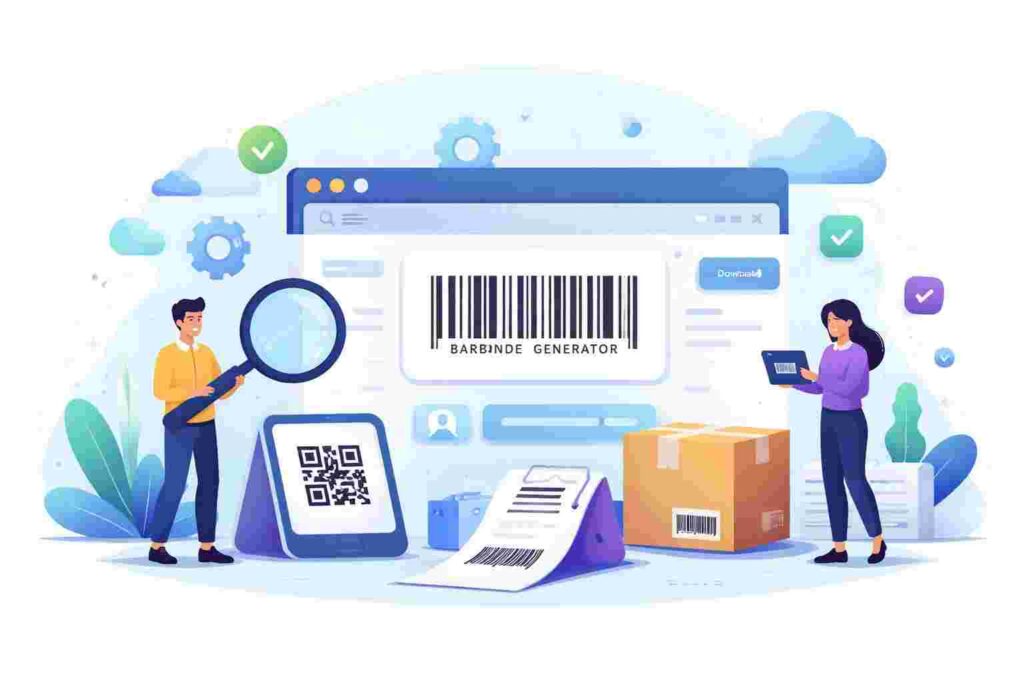
In today’s fast-paced business environment, the need for efficient and reliable inventory management tools has never been greater. This has led to the increasing popularity of barcode generator web solutions in various industries. Businesses are constantly seeking ways to streamline operations, reduce errors, and enhance productivity. Barcode generators have emerged as a pivotal technology that not only meets these needs but also offers a host of advantages that can transform the way companies operate. In this article, we will take a comprehensive look at web-based barcode generators, their technological framework, and the profound impact they have across different sectors.
Understanding Web-Based Barcode Generators
What is a Barcode?
A barcode is a machine-readable representation of data that can be scanned to retrieve information. Originally developed in the 1950s for tracking products, barcodes have become ubiquitous in modern business. They are used in retail to tag items, in logistics for tracking shipments, and even in healthcare for patient management. This simple tool encapsulates complex data seamlessly, offering a quick and efficient way to process information.
How Barcode Generators Work
Web-based barcode generators create codes by converting alphanumeric data into a graphic representation that can be scanned. Users input their desired data (such as product numbers or URLs), choose the barcode format (like UPC, QR Code, or Code 128), and the generator produces a downloadable image. This quick process eliminates the need for expensive software or equipment, making it accessible to businesses of all sizes.
Key Features of Web-Based Solutions
- Accessibility from any device with internet connectivity.
- Versatility in generating different barcode formats.
- Integration capabilities with inventory management systems.
- User-friendly interfaces minimizing the learning curve.
- Cost-effectiveness compared to traditional barcode generation software.
The Technology Behind Web-Based Barcode Generators
Encoding Standards and Formats
Barcodes come in various standards and formats such as QR Codes, UPC, EAN, and Code 39, each optimized for different applications. Web-based barcode generators leverage standardized algorithms to ensure that the generated codes are universally readable across different devices. The flexibility in choosing the format based on industry requirements is a significant advantage.
Integration with Other Software
Modern web-based barcode generators often come with integration features that allow them to connect seamlessly with existing software such as inventory management and point-of-sale systems. This interoperability ensures that data flows smoothly, significantly reducing the chances of human error and enhancing operational efficiency.
Security Features and Data Protection
With the increasing importance of data security, many web-based barcode generators incorporate robust security features to protect sensitive information. By employing encryption standards and secure data transmission protocols, these solutions ensure that the information encoded in barcodes remains safe from unauthorized access.
Business Impact Across Industries
Retail and Inventory Management
In retail, efficiency is paramount. Web-based barcode generators streamline inventory management by allowing businesses to quickly label products. Retailers can instantly update stock levels and instantly retrieve product information at checkout, enhancing the customer experience. Studies show that retail businesses adopting barcode technology see inventory accuracy improve by as much as 30%.
Healthcare Applications
The healthcare industry benefits immensely from barcode technology. Hospitals use web-based barcode generators to create labels for medication, ensuring accurate administration and tracking of patient records. This reduces medication errors and enhances patient safety significantly—hospitals leveraging barcode systems report up to a 50% reduction in adverse drug events.
Logistics and Supply Chain Innovations
Web-based barcode generators play a pivotal role in logistics and supply chain management. They enable companies to track shipments, manage inventory levels, and facilitate just-in-time delivery systems. Logistics firms utilizing barcodes can reduce operational costs by 20% through improved accuracy in tracking and inventory management.
Strategic Advantages of Using a Barcode Generator Web
Cost-Effectiveness
Utilizing a web-based barcode generator is a cost-efficient alternative to traditional methods. Companies save on licensing fees and software installations commonly associated with desktop solutions. Additionally, by reducing errors and increasing efficiency, businesses are able to achieve a quicker return on investment.
Speed and Efficiency
Time is a critical factor in business operations. Web-based barcode generators enable rapid barcode creation, allowing businesses to get products to market faster. The speed at which barcodes can be generated and printed translates directly into improved operational efficiency.
User-Friendly Design and Accessibility
One of the standout features of web-based barcode generators is their user experience. Designed to be intuitive, these platforms can be used by anyone, regardless of technical expertise. This accessibility empowers all team members to engage with the tool effectively, thus democratizing the productivity benefits across various departments.
Limitations and Risk Considerations
Internet Dependency
While web-based barcode generators are highly accessible, they are reliant on a stable internet connection. In environments with poor connectivity, productivity can suffer. Companies must therefore ensure that they have reliable internet resources in place.
Data Privacy Concerns
Using cloud-based services can raise questions regarding data privacy and security. Businesses must vet their chosen barcode generator solutions to ensure they comply with data protection regulations and use secure practices to safeguard sensitive information.
Errors in Barcode Generation
Although web-based barcode generators are designed to minimize errors, mistakes can still occur during data input or configuration. Organizations should establish verification processes to ensure accuracy in barcode generation, as a simple mistake can lead to significant operational disruptions.
Comparative Analysis of Barcode Generator Options
Web-Based vs. Desktop Solutions
Open Source vs. Commercial Tools
Pricing Models Comparison
| Feature | Web-Based Solutions | Desktop Solutions | Open Source Tools | Commercial Tools |
|---|---|---|---|---|
| Cost | Subscription based | Upfront purchase | Free but may require tech support | Licensing fees |
| Accessibility | Any device with internet | Specific device only | Device dependent | Device dependent |
| Updates | Automatic updates | User initiated | Community driven | Vendor managed |
| User Friendliness | High | Variable | Moderate, requires tech skill | High, but can be complex |
| Support | Online support available | Limited | Community forums | Dedicated support |
Key Statistics and Market Trends
Growth Rate of Barcode Technology Adoption
The barcode technology market has been witnessing exponential growth. According to a report from Research and Markets, the global barcode printer market was valued at $4.16 billion in 2020 and is projected to reach $6.7 billion by 2025, marking a CAGR of 10.7%. This indicates a robust adoption of barcode technology across industries.
Industry-Specific Usage Statistics
In retail, the use of barcodes is nearly ubiquitous, with over 90% of retailers implementing barcode technology in some form. Meanwhile, in logistics, research reveals that effective barcode tracking can help reduce fulfillment errors by up to 40%, illustrating the significant impact of this technology.
Projected Market Value
As technology advances, the barcode generator market is expected to expand alongside. With an anticipated market size of $11 billion by 2027, businesses that invest in these tools will likely see a considerable return due to heightened operational efficiency.
Real-World Case Studies with Measurable Outcomes
Success Story from Retail Sector
A leading grocery chain implemented a web-based barcode generator for their inventory management. Prior to implementation, the store faced a 15% discrepancy rate in inventory counts. After switching to a barcode system, they reported an immediate reduction in discrepancies by over 30% within the first month, leading to significant cost savings and improved shelf availability.
Healthcare Case Study
In a prominent hospital, the transition to barcode-generated labels for medication and patient identification led to a reduction in medication administration errors by 50%. The implementation streamlined workflow, and staff reported less time spent on manual entry, significantly increasing operational efficiency.
Efficiency Gain in Logistics
A logistics company adopted a web-based barcode generator to track shipments and inventory. Initially, they faced challenges with tracking errors that led to delays. Post-implementation, they reported a 25% faster processing time for shipments and a 40% reduction in the errors associated with missed deliveries.
Future Outlook of Barcode Generator Technology
Innovations on the Horizon
The future of barcode generation will likely include enhanced integration with emerging technologies such as augmented reality (AR) and wireless communication standards. These advancements could further streamline processes and improve accuracy in data management.
Integration with AI and IoT
As businesses continue to embrace the Internet of Things (IoT), we can expect barcode generation tools to incorporate AI features for predictive analytics. Such integration offers businesses actionable insights from the data collected, allowing for smarter inventory management and forecasting.
Expected Changes in Market Landscape
With the increasing functionalities of web-based barcode generators, the market landscape is expected to evolve significantly. More businesses will integrate comprehensive barcode solutions into their operations, enhancing not just inventory management but overall supply chain efficiency.
Frequently Asked Questions
What types of barcodes can be generated?
Web-based barcode generators can create different types of barcodes such as QR Codes, UPC, Code 128, and more. Each type serves specific purposes. For instance, QR Codes are ideal for linking directly to URLs, whereas UPC codes are essential in retail environments.
Is a barcode generator web user-friendly?
Most web-based barcode generators are designed with user experience in mind, featuring intuitive interfaces that allow users to generate codes with minimal training. This ease of use enables even those with limited technical expertise to start generating barcodes quickly and efficiently.
How secure is the data when using a web-based generator?
Data security in web-based barcode generators is a vital concern. Reputable services employ encryption and other security measures to protect sensitive information. However, it’s crucial for businesses to choose services that comply with data protection regulations and offer transparent privacy policies.
Can I customize my barcodes?
Absolutely. Web-based barcode generators often offer customization features that allow users to modify elements such as size, color, and even include logos within their barcodes. Customization ensures that the barcodes align with brand identity while maintaining functionality.
What industries can benefit from barcode generators?
Virtually all industries can benefit from barcode generators, but they are especially prevalent in retail, healthcare, logistics, manufacturing, and warehousing. Each of these sectors employs barcode technology to enhance operational efficiency, accuracy, and tracking.
How do I choose the right barcode generator?
Selecting the right barcode generator involves evaluating several factors such as ease of use, types of barcodes supported, integration capabilities, and cost. Assessing business requirements and testing a few solutions can also help in making an informed choice that aligns with operational goals.
Conclusion
Web-based barcode generators are not just tools for creating barcodes; they are transformative solutions that have brought efficiency, accuracy, and strategic advantages to businesses across industries. As we move forward, leveraging such technologies will be essential for organizations seeking to enhance their operational capabilities. By understanding the benefits, implications, and future prospects of this technology, businesses can position themselves at the forefront of their industries in the rapidly evolving technological landscape.