
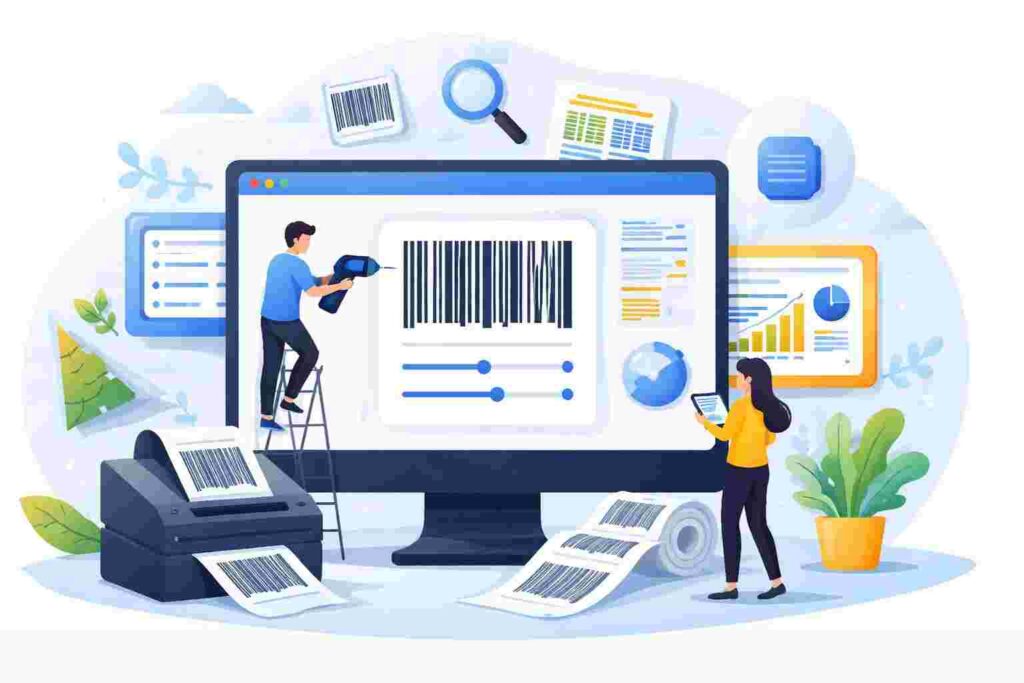
Barcode makers are crucial tools in the modern business landscape, allowing companies to streamline operations, improve accuracy in inventory management, and enhance customer experiences. By understanding the features available in barcode makers, businesses can significantly boost productivity and ensure their operations run smoothly. In this comprehensive guide, we will explore nine powerful features of barcode makers and their implications for businesses across various industries.
Understanding Barcode Makers
To fully appreciate the benefits of barcode makers, it’s essential to establish a foundational knowledge of what they are and their diverse applications. Barcode makers are software or hardware tools that allow the creation of barcodes, which can be scanned for easy data retrieval and tracking.
What is a Barcode Maker?
A barcode maker is a tool designed to generate barcodes that can be printed or displayed electronically. These tools can range from simple online applications to advanced enterprise software that integrates with existing business systems. Businesses use barcode makers to create unique codes for products, which can then be scanned using barcode readers at various points in the supply chain.
Types of Barcodes Explained
There are many types of barcodes, each serving different purposes:
- Linear Barcodes: This includes the popular UPC (Universal Product Code) and EAN (European Article Number) formats commonly used in retail.
- 2D Barcodes: Such as QR codes and Data Matrix codes, allowing for more diverse data storage and can be scanned with smartphones.
- PDF417 Barcodes: Often used in transport and identification cards; they can encode a significant amount of data.
- Code 128 and Code 39: Used in various industrial and logistics settings for tracking goods.
Overview of Barcode Generation Process
The process of generating a barcode generally involves three steps:
- Data Input: Entering the information that needs to be encoded into the barcode.
- Design Customization: Adjusting the layout, size, and style of the barcode based on user requirements.
- Output Options: Exporting the barcode in various formats such as image files or directly printing them on labels.
Key Features of Barcode Makers
Barcode makers come with a variety of features that enhance their functionality, making them indispensable in business operations.
Customization Options
Customization is a crucial feature of barcode makers. Users can create barcodes that meet specific needs with varied designs, colors, and sizes. This provides branding opportunities and ensures readability across various scanning devices.
Multi-format Support
Many barcode makers support multiple barcode types and formats. This flexibility allows businesses to cater to diverse needs across different departments or product lines. For instance, a company selling both retail products and providing logistics services may require both linear and 2D barcodes.
Integration Capabilities
Modern barcode makers often come with integration options allowing seamless compatibility with existing inventory management systems, CRM software, and other business tools. This creates a more efficient workflow and minimizes human error during data entry.
The Business Impact of Barcode Technology
Implementing barcode technology can lead to substantial improvements in various sectors. The impact on accuracy, efficiency, and ultimately the bottom line is significant.
Retail Industry Innovations
In the retail sector, barcode technology has revolutionized inventory management. Stores can track stock levels in real time, ensuring shelves are stocked efficiently without over-ordering. As a result, retailers experience reduced carrying costs and improved customer satisfaction due to better availability of products.
Supply Chain Management Enhancements
Effective supply chain management relies on accurate tracking of products from manufacturing to delivery. Barcode technology allows for better visibility throughout the supply chain, reducing delays and miscommunications. Businesses can identify bottlenecks and adapt swiftly, improving overall efficiency.
Healthcare Applications and Benefits
In healthcare, barcode systems play a vital role in patient safety and operational efficiency. Barcodes are used for medication administration, ensuring the right patient receives the correct dosage. This technology decreases medication errors significantly, promoting safer hospital environments.
Strategic Advantages of Using a Barcode Maker
Utilizing a barcode maker can provide strategic advantages for businesses, often leading to enhanced operational efficiencies.
Time Savings and Efficiency
One of the primary benefits of using a barcode maker is the time saved in operational processes. Scanning barcodes is considerably faster than manually entering data, which leads to quicker inventory checks and processing times.
Cost Reduction Opportunities
With improvements in efficiency, businesses can expect notable cost reductions. By minimizing human error and streamlining processes, costs associated with labor, misplaced inventory, and stockouts are significantly lowered.
Improved Accuracy in Data Handling
Accuracy in data handling is crucial for any business. Barcode technology reduces the likelihood of errors associated with manual data entry. As products are scanned, information is captured with precision, allowing for reliable inventory management and record-keeping.
Limitations and Risk Considerations with Barcode Makers
While barcode technology offers many advantages, it is essential to recognize potential limitations and risks to ensure informed decision-making.
Dependence on Technology
Businesses relying heavily on barcode technology face risks related to system failures or malfunctions. Any downtime in barcode processing capabilities can disrupt operations significantly, potentially affecting customer service and sales.
Quality Control Issues
Improperly printed barcodes or low-quality scanning devices can hinder the effectiveness of a barcode system. Poor quality can lead to scanning failures, which may confuse inventory systems and lead to inaccuracies.
Security Vulnerabilities
With the increased digitization of inventory management, security vulnerabilities become a concern. Hackers may exploit weaknesses in barcode systems to alter data or intercept sensitive information. Thus, businesses must invest in robust security protocols and regular system audits to protect their data.
Comparative Analysis of Barcode Makers
Analyzing different barcode makers can provide insights into their functionality and help businesses choose the right solution. Below is a detailed comparison table of leading barcode makers available in the market:
| Barcode Maker | Customization | Multi-format Support | Integration Capabilities | Price Range |
|---|---|---|---|---|
| BarTender | Extensive | Yes | Yes | $500-$1500 |
| Barcode Generator | Basic | Limited | No | Free-$100 |
| Labeljoy | Moderate | Yes | Yes | $199-$599 |
| NiceLabel | Advanced | Yes | Yes | $300-$1200 |
| ZebraDesigner | Varying | Yes | Yes | $0-$600 |
The table outlines key features compared across various barcode maker tools, allowing businesses to select a tool that best fits their specific needs and budget.
Pricing Analysis
Pricing for barcode makers can vary significantly based on features and capabilities. Basic tools may be available for free, while more advanced systems can range from a few hundred to several thousand dollars. When considering costs, businesses should assess their requirements and the potential return on investment (ROI) that a robust barcode system can provide.
User Experience Evaluation
User experience is a crucial element in selecting a barcode maker. It involves evaluating the ease of use of the interface, availability of customer support, and online reviews. A tool that is difficult to navigate can hinder productivity, whereas user-friendly options enhance efficiency and satisfaction.
Statistics and Market Trends in Barcode Technology
The adoption of barcode technology continues to rise, with numerous statistics reflecting its growing importance in various industries.
Market Growth Statistics
The barcode technology market is projected to grow significantly, with a forecast CAGR of 5.9% from 2022 to 2030. This growth reflects an increasing reliance on efficient inventory management and automated processes across multiple sectors. Additionally, the global barcode reader market size is expected to reach USD 29.10 billion by 2025, highlighting the increased investment in this technology.
Consumer Adoption Rates
According to a recent study, nearly 90% of retailers utilize barcode technology in their daily operations, underscoring its critical role in the retail industry. This high rate of adoption is driven by the need for enhanced customer service, inventory accuracy, and operational efficiency.
Future Forecasts for Barcode Technology
Experts predict that barcode technology will continue to evolve with advancements in artificial intelligence and the Internet of Things (IoT). By 2030, it is anticipated that 100% of new retail setups will integrate barcode systems for effective inventory and sales tracking, paving the way for smarter retail experiences.
Real-World Case Studies on Barcode Implementations
Examining real-world applications of barcode technology can provide valuable insights into its effectiveness and measurable outcomes.
Case Study: Retail Success Story
A leading retail chain implemented barcode technology to streamline inventory management. Before implementation, stock discrepancies resulted in a 20% loss in potential sales. After adopting a comprehensive barcode system, inventory accuracy improved to over 98%, with a direct increase in sales of 15% due to improved product availability.
Case Study: Warehouse Optimization
A distribution center faced challenges in tracking inventory rotations and order fulfillment times. By integrating barcode scanning into their processes, the time taken to locate items decreased by 50%. The warehouse achieved a significant reduction in operating costs, and order accuracy increased from 85% to 98%.
Case Study: Healthcare Inventory Management
In a busy hospital setting, the implementation of barcode systems for tracking medication led to a drastic reduction in medication errors. Prior to implementation, the error rate was 5%. Post-implementation, this rate dropped to less than 1%, significantly improving patient safety and optimizing pharmacy inventory levels.
Future Outlook of Barcode Maker Technology
The future of barcode technology is bright with anticipations of significant advancements that will enhance its effectiveness.
Emerging Technologies in Barcode Systems
Emerging technologies, including augmented reality and artificial intelligence, are expected to transform barcode systems. Such innovations could allow for real-time data analysis and improved integration with mobile devices, facilitating a streamlined operational workflow.
Predictions for Industry Adoption
As technology develops, industries that have yet to utilize barcode systems are anticipated to adopt these solutions rapidly. The healthcare sector, in particular, is expected to see increased integration of barcodes for tracking patient care and inventory needs.
Innovations on the Horizon
Innovations in barcode technology may include advanced data encoding techniques that allow for larger volumes of information to be stored. Coupled with robust security features, these innovations could fortify the data integrity associated with barcodes.
Frequently Asked Questions about Barcode Makers
What types of barcodes can I create?
Barcode makers allow for the creation of various types of barcodes, including linear and 2D formats. Typical barcodes include UPC, EAN, Code 128, QR codes, and Data Matrix codes, catering to diverse applications across industries like retail, logistics, and healthcare.
How do I choose the right barcode maker?
When selecting a barcode maker, consider the specific needs of your business. Assess the types of barcodes required, the extent of customization necessary, and the compatibility with existing systems. Additionally, evaluate user reviews and any available customer support options to ensure a smooth implementation process.
Can barcode makers integrate with existing systems?
Yes, many barcode makers offer integration capabilities. This facilitates seamless connectivity with existing inventory management systems, ERP software, and other business tools, improving operational workflows and enhancing efficiency.
What is the cost of barcode maker tools?
The cost of barcode maker tools can vary significantly based on their capabilities. Basic tools may be free or under $100, while advanced enterprise solutions can range from $500 to over $1000. It’s crucial to weigh the potential return on investment against the costs to determine which tool aligns with your business needs.
Are there mobile apps for barcode generation?
Yes, several mobile applications allow for barcode generation, enabling on-the-go barcode creation. These apps are particularly useful for small businesses or individuals who need quick access to barcode functionalities without the need for extensive software installations.
How do I ensure barcode quality?
Ensuring barcode quality involves using high-quality printing methods and ensuring the barcodes are properly encoded. Regular testing with scanning devices can help catch potential issues before they affect operations. Additionally, using established design and printing guidelines will enhance scannability.
Conclusion
In conclusion, barcode makers are powerful tools that significantly enhance business operations across various industries. By leveraging the features outlined in this guide, businesses can improve their efficiency and accuracy, driving better outcomes and a higher return on investment. The future of barcode technology appears bright, with innovations on the horizon that promise to further improve the capabilities and applications of barcode systems.