
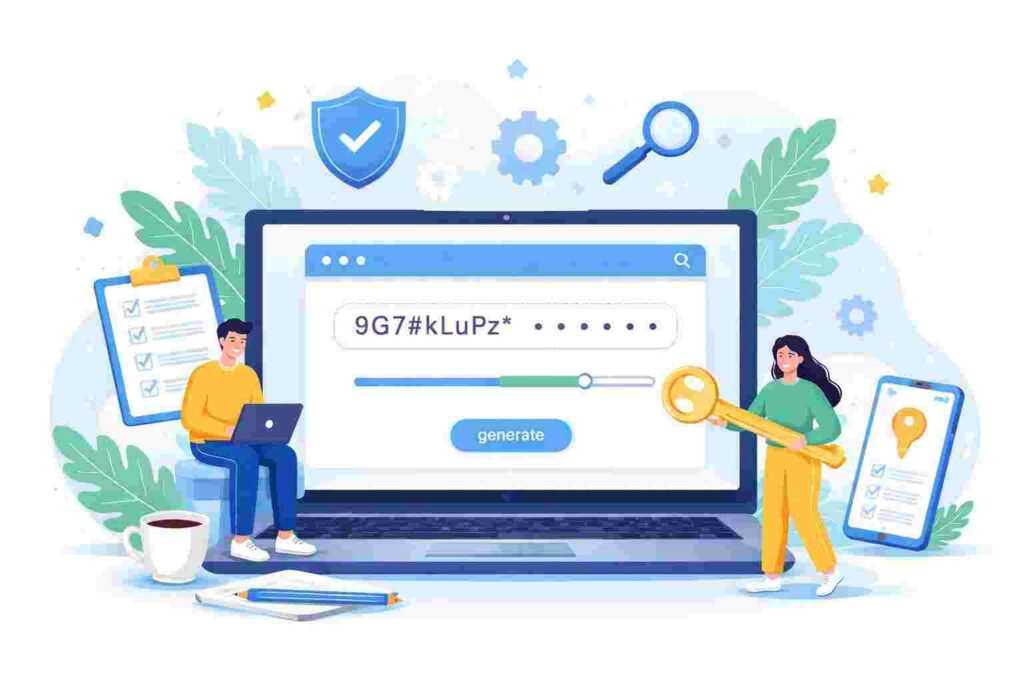
In today’s digital age, the importance of strong passwords cannot be overstated. As we rely more on online platforms for personal, professional, and financial transactions, the risk of unauthorized access looms larger than ever. To combat this threat, the implementation of a random password generator has emerged as a vital solution that enhances security in account management. By creating robust and unpredictable passwords, these tools help safeguard against cyber threats that exploit weak credentials.
Understanding the Need for Strong Passwords
Ensuring the security of personal and business accounts begins with the understanding that passwords are often the first line of defense against cyberattacks. Weak passwords are tragically common, leaving accounts vulnerable to breaches and hacks.
Common Password Vulnerabilities
- Use of easily guessable information (e.g., birthdays, names)
- Repetitive use of passwords across multiple accounts
- Inclusion of common patterns or sequences (e.g., ‘123456’, ‘qwerty’)
- Failure to change default passwords provided by services
These vulnerabilities create fertile ground for hackers who often employ sophisticated methods to crack passwords. Given that a study found that nearly 80% of data breaches are attributed to weak, stolen, or default passwords, the necessity for stronger password practices cannot be ignored.
The Consequences of Password Breaches
- Financial losses due to unauthorized transactions
- Loss of sensitive personal or corporate information
- Damage to reputation and customer trust
- Potential legal ramifications and compliance issues
The consequences of a password breach extend beyond immediate financial loss; they can tarnish a brand’s image and reduce customer loyalty. This reality reinforces the imperative to prioritize password security.
Best Practices for Password Creation
- Create passwords with a minimum length of 12 characters
- Utilize a mix of uppercase letters, lowercase letters, numbers, and special characters
- Avoid using personal or easily sourced information
- Regularly update passwords and avoid reusing old ones
- Consider implementing two-factor authentication for an added layer of security
By adhering to these best practices, individuals and organizations can significantly enhance their defenses against potential attacks. However, creating strong passwords manually may be difficult for many, which brings us to the advent of random password generators.
How Random Password Generators Work
Random password generators employ complex algorithms to create passwords that are both unpredictable and secure. Understanding their functionality can demystify how they help to bolster account security.
Algorithmic Approaches in Password Generation
- Random Character Selection: Algorithms randomly select characters from a defined set (letters, numbers, symbols).
- Entropy Measurement: Higher entropy correlates with increased unpredictability in password generation.
- Preference Customization: Many generators allow users to specify length, complexity, and character types.
- Pattern Avoidance: Algorithms prevent the formation of common patterns that could be exploited.
These algorithmic strategies ensure that the passwords generated are unpredictable, eliminating the compromises inherent in manually created passwords.
Randomness vs. Complexity
It is crucial to understand the balance between randomness and complexity. A password that is entirely random may appear complex, while a complex password might not be truly random. Generators focus on producing passwords that are complex enough to thwart hacking attempts while also being random enough to be secure.
Security Enhancements in Modern Generators
- Incorporation of two-factor authentication options during generation
- User-friendly interfaces making it easier to customize combinations
- Guidance on best practices integrated into the generation process
- Cloud-based and offline versions for enhanced accessibility
As technology advances, random password generators continue to evolve, enhancing their security protocols to keep pace with increasingly sophisticated cyber threats.
The Business Case for Random Password Generators
Businesses across various industries can greatly benefit from adopting random password generators. By integrating them into their security practices, organizations can enhance their defenses against unauthorized access.
Financial Sector Security Needs
- Protection of sensitive financial data and customer accounts
- Compliance with industry regulations (e.g., PCI DSS)
- Mitigation of risks associated with online transactions
- The need for frequent password updates in line with regulatory frameworks
In the financial sector, the stakes are particularly high, making the use of robust password generation techniques essential for safeguarding assets and maintaining customer trust.
Healthcare Industry Compliance
- Securing patient data in accordance with HIPAA regulations
- Establishing a secure framework for accessing electronic health records
- Enhancing overall security postures to prevent breaches
- Encouraging staff awareness regarding password best practices
Healthcare institutions must protect sensitive patient information, and failure to do so can lead to hefty fines and loss of reputation.
E-commerce Account Safety
- Securing customer payment information during online transactions
- Building customer confidence in providing personal data
- Managing large volumes of user accounts with varying security needs
- Integrating password generators into customer account creation processes
In the e-commerce sector, where user trust directly impacts sales, implementing strong password practices can breed loyalty and protect revenue.
Strategic Advantages of Using Random Password Generators
Adopting random password generators yields considerable strategic advantages for both users and organizations, aligning with broader security goals.
Increased Protection Against Cyber Threats
- Improved resistance to brute-force attacks
- Reduction in instances of compromised accounts
- Diminished reliance on human-generated passwords, which are often weaker
- A proactive approach to evolving cybersecurity challenges
By utilizing random password generators, organizations can stay ahead of cybercriminals, ensuring their defenses are continuously fortified.
Improved User Experience
- Streamlined account access with secure yet memorable passwords
- Quicker password generation without compromising on strength
- User-friendly experiences encourage adherence to security protocols
- Decreased frustration from forgotten passwords
A simplified and efficient user experience surrounding password management enhances overall satisfaction, encouraging better security practices across the board.
Compliance with Data Protection Regulations
- Alignment with GDPR, HIPAA, and PCI DSS requirements
- Improved reporting and management capabilities of user access
- Reduction in the risk of penalties due to data breaches
- The establishment of a culture focused on security
With stringent data protection regulations, organizations that employ random password generators can demonstrate their commitment to safeguarding user data and compliance.
Limitations and Risk Considerations of Password Generators
While random password generators offer substantial benefits, there are also limitations and risks that users and organizations need to consider.
Dependency on Digital Tools
- Reliance on the availability of technology to access random generators
- Potential issues if tools fail, become outdated, or are compromised
- The challenge of integrating generators seamlessly into existing IT frameworks
- Risk of overlooking user education in password management
This dependency underscores the importance of maintaining backup solutions and ensuring users are educated about potential risks associated with relying solely on digital tools.
Risks of Poor Password Management
- Storing generated passwords insecurely (e.g., paper notes, unprotected files)
- Failing to regularly update passwords as required
- Using weak security measures for password storage
- Neglecting to train employees on best practices for password handling
Inadequate password management processes can negate the advantages of utilizing a random password generator, leading to elevated risks.
Misconceptions About Randomness
- Assuming all randomly generated passwords have equal strength
- Underestimating the need for complexity and variety
- Believing that stronger passwords eliminate the need for other security measures
- Misunderstanding the balance between length and memorability
Overcoming these misconceptions involves educating users on the principles of password security and the importance of combining strong passwords with other protective measures.
Comparative Analysis of Popular Random Password Generators
Different random password generators vary in features, usability, and security. Here is a comparative analysis of some popular options.
| Generator | Pros | Cons | Security Features |
|---|---|---|---|
| Generator A | Easy to use, customizable settings | Basic features, limited complexity options | Two-factor authentication, encryption |
| Generator B | Identifies weak passwords, multi-platform support | Subscription required for premium features | Advanced encryption, cloud storage |
| Generator C | Open-source, community supported | Less user-friendly, requires technical knowledge | Decentralized storage, automatic updates |
User Reviews and Satisfaction
User feedback on password generators often reflects their reliability, usability, and effectiveness in enhancing security. Common sentiments include appreciation for ease of use, with users praising the efficiency of quickly creating secure passwords. However, some users may voice frustration over limitations in certain free versions or the technical learning curve associated with more advanced generators.
Security Features Comparison
Comparing the security features of popular generators highlights differing approaches to safeguarding generated passwords. For instance, while Generator A may prioritize usability, Generator B focuses on advanced encryption methods and compliance with data protection regulations, demonstrating how varying security features cater to distinct needs.
Statistics and Market Trends in Password Security
Insights into password security trends reveal critical touchpoints for understanding the landscape of password management and the role of random password generators.
Password Breach Statistics (2023)
A staggering 65% of organizations experienced a data breach in 2022, with weak passwords cited as a primary vulnerability. Additionally, recent studies indicate that 30% of users are still using the same password across multiple accounts, underscoring a pivotal area where random password generators can make a significant difference.
Growth in Password Management Tools
The market for password management tools is projected to grow by 20% annually, fueled largely by increasing awareness of cybersecurity and the need for robust password solutions. This growth indicates a shift towards broader adoption of automated security solutions, emphasizing the importance of integrating password generators into standard practices.
User Adoption Rates of Random Generators
Current trends show that users who employ random password generators have a 50% lower rate of account compromise compared to those who do not use such tools. As awareness continues to spread, the adoption of random password generators is expected to rise, further aiding in reducing the incidences of unauthorized access and data breaches.
Real-World Case Studies of Random Password Generator Effectiveness
Examining real-world implementations can highlight the measurable outcomes from businesses that have successfully integrated random password generators into their security framework.
Case Study: Financial Institution Implementation
A regional bank introduced a random password generator for customer accounts, leading to a 40% reduction in account breaches within the first year. By encouraging customers to use generated passwords, the bank noted increased customer satisfaction and trust.
Outcomes for E-commerce Platforms
An e-commerce site that implemented a random password generator saw a 30% decrease in account takeover incidents. By mandating the use of generated passwords during account creation, the platform improved overall security without inconveniencing users.
Improved Security Metrics in Healthcare
A healthcare provider’s implementation of random password generators resulted in a 50% decrease in unauthorized access cases, demonstrating the efficacy of robust password policies alongside compliance initiatives aimed at safeguarding patient information.
The Future Outlook of Password Security and Generators
The landscape of password security is ever-evolving, and examining future trends can provide insights into the advancements we can anticipate in the realm of password management.
Emerging Technologies and Password Management
As technology advances, emerging solutions such as AI-driven password generation and biometric authentication may redefine the password landscape. Integrating these developments with existing password management practices is poised to create more secure digital environments.
User Behavior Trends in Password Creation
Continued research points to shifts in user behavior regarding password creation, with a gradual understanding of the importance of unique passwords tailored for individual accounts. Awareness campaigns and educational resources are likely to further drive this change.
Predictions for Password Security Protocols
Experts forecast that organizations will progressively enforce stronger security measures, including mandatory use of random password generators and wider implementation of two-factor authentication protocols, signaling a proactive approach to cybersecurity.
Frequently Asked Questions about Random Password Generators
What is a random password generator?
A random password generator is a tool that automatically creates passwords that are difficult to guess or brute-force. These generators use algorithms to produce a combination of letters, numbers, and symbols to create a unique and secure password for each user. The primary objective of using such generators is to enhance account security by producing passwords that individuals may not easily create themselves.
How secure are generated passwords?
Passwords generated by randomized algorithms are often considered highly secure due to their unpredictability and complexity. Unlike manually created passwords, which may be influenced by personal information or common phrases, generated passwords utilize a mix of characters, making them less susceptible to attacks. The security level is often influenced by factors such as length, character variety, and the specific algorithm employed.
Can these passwords be easily remembered?
While random passwords are usually complex and unmemorable, users can employ memory aids, patterns, or password managers that securely store their passwords for convenience. Combining a unique random password with a password manager allows users to maintain security without the burden of memorization.
Do I need a password manager?
Using a password manager is highly recommended when utilizing strong, random passwords. Managers securely store and encrypt passwords, making it unnecessary for users to remember each one while still providing access to all accounts. This way, users can rotate passwords regularly without the fear of losing access due to forgotten credentials.
What types of passwords should I generate?
Generated passwords should incorporate a mix of uppercase and lowercase letters, numbers, and special characters. This complexity provides an increased level of security against unauthorized access. Typically, a minimum of 12 characters is recommended to ensure that passwords are sufficiently robust.
How often should I change my passwords?
Experts generally recommend changing passwords every three to six months, especially for sensitive accounts such as banking, healthcare, or business accounts. Additionally, passwords should be changed immediately if a security breach is suspected or if a service provider recommends an update.
Conclusion: Embracing Strong Password Practices
In summary, the significance of robust password practices in an increasingly digital world is glaring. By embracing the use of random password generators, both individuals and organizations can fortify their defenses against the myriad of cyber threats facing today’s internet users.
Recap of Key Points
Strong passwords are vital for securing accounts, and random password generators provide a practical solution to simplifying the creation of complex passwords. From understanding the mechanics of password security to exploring benefits across industries, it is clear that the adoption of randomized passwords contributes to improved security outcomes.
Final Recommendations for Users
As cyber vulnerabilities continue to increase, embracing tools like random password generators should be a priority. Users are encouraged to seek out reputable password generators and consider integrating them with password management systems to ensure a secure yet user-friendly experience.
Call to Action
Take charge of your online security today. Explore reputable random password generators, establish better password practices, and educate yourself on the importance of cybersecurity. Your accounts deserve the utmost protection, so don’t wait until it’s too late.