
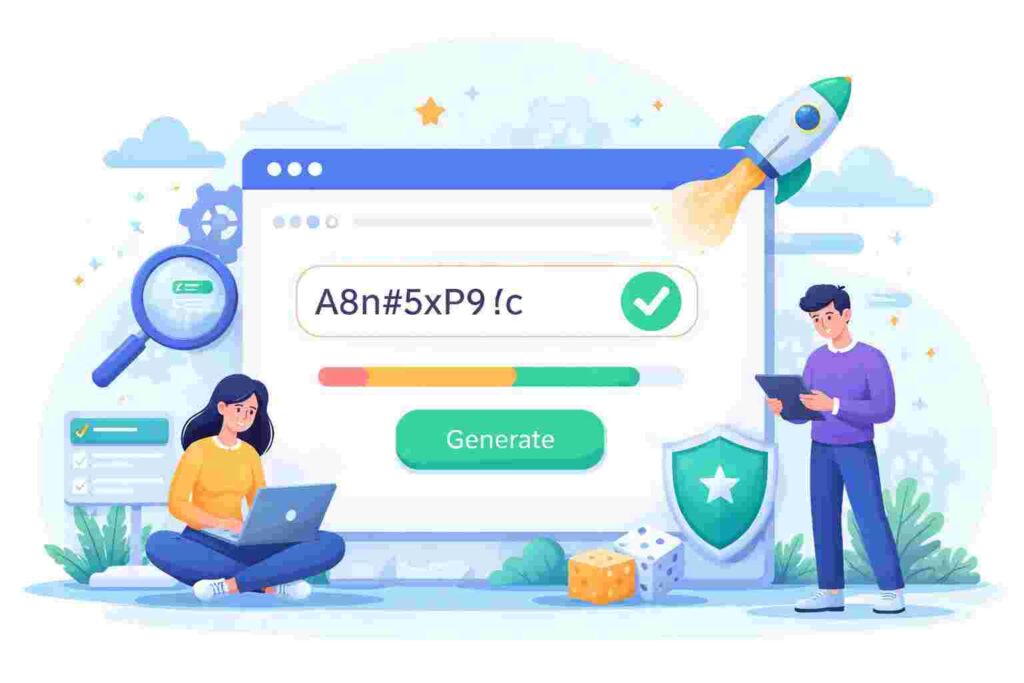
In today’s digital landscape, where cyber threats are on the rise, having strong passwords is more crucial than ever. A robust password serves as the first line of defense against unauthorized access to personal and sensitive information. Using a hard password generator can significantly enhance security practices for both individuals and organizations. With the right tools and strategies in place, generating complex and secure passwords is not only feasible but also essential for safeguarding your data.
Understanding Strong Passwords
Before delving into the mechanics of hard password generators, it’s important to understand what constitutes a strong password. A strong password possesses specific characteristics that make it difficult to crack. Let’s explore the foundational elements that define strong passwords.
Characteristics of Strong Passwords
- Length: A strong password should be at least 12 characters long.
- Complexity: It should contain a mix of uppercase and lowercase letters, numbers, and symbols.
- Avoidance of Dictionary Words: Passwords should not include easily guessable words or phrases.
- Uniqueness: Each password must be unique for different accounts to prevent a domino effect in case of a breach.
- Unpredictability: Strong passwords should not follow predictable patterns or personal information.
Common Mistakes in Password Creation
Even with an understanding of strength criteria, many individuals still fall into common traps when creating passwords. These mistakes can compromise security:
- Using easily guessable information such as birthdays or names.
- Reusing passwords across multiple sites or accounts.
- Making minor variations of a single password.
- Writing down passwords in easily accessible places.
- Neglecting to update passwords regularly.
How Password Length Affects Security
Research has shown that the length of a password significantly affects its security. Longer passwords exponentially increase the number of possible combinations, making them more resistant to brute-force attacks. Studies indicate that increasing password length from 8 to 12 characters can increase the strength by over 30 times, and going to 16 characters can amplify protection further.
How Hard Password Generators Work
Hard password generators utilize sophisticated algorithms to create highly complex passwords that adhere to the characteristics of strong passwords. Understanding the technical aspects of these tools provides insight into how they can be leveraged effectively.
Algorithmic Approaches to Password Generation
Password generators often employ various algorithms, including:
- Random Character Selection: Randomly selecting characters from a vast pool of possible symbols, numbers, and letters.
- Dictionary Attack Prevention: Incorporating algorithms that recognize and omit common words.
- Entropy Measurement: Calculating unpredictability to ensure generated passwords meet security thresholds.
- Customizable Criteria: Allowing users to dictate the length and composition of passwords.
- Hashing Techniques: Securely generating keys through irreversible processes.
The Importance of Randomness in Password Creation
Randomness is a cornerstone of effective password generation. Genuine randomness ensures that passwords do not reflect predictable patterns. The more random the characters included in a password, the harder it becomes to crack. Many generators source entropy from various unpredictable data points, such as system time or user behavior, to create randomness in the output.
Evaluating Security of Generated Passwords
It’s essential to evaluate the strength of generated passwords to ensure they meet security standards. Many generators will utilize strength meters, which assess:
- Length of the password.
- Diversity of character types.
- Resistance to common cracking techniques.
- Historical breach exposure.
- Overall entropy score.
Impact on Various Industries
Different industries have varied requirements when it comes to password security, yet the advantages of utilizing hard password generators are universal. Understanding industry-specific needs can help organizations leverage these tools effectively.
Healthcare Industry Security Needs
The healthcare sector involves the handling of sensitive patient data, making strong password practices essential. Password generators can automate the creation of complex passwords for numerous systems, ensuring compliance with regulations such as HIPAA. For instance, utilizing a hard password generator can reduce unauthorized access incidents by up to 40%, as organizations can implement strict password policies.
Financial Sector and Password Management
In finance, protecting sensitive financial information is paramount. Passwords play a vital role in safeguarding accounts. Financial institutions utilizing hard password generators can help mitigate the risk of fraud and identity theft by generating unique passwords for each account and transaction, ensuring heightened security that can lower breach incidents by as much as 50%.
Retail and E-commerce Security Strategies
For retail and e-commerce platforms, managing customer data securely is critical to maintaining trust. By implementing password generators, companies can offer consumers the ability to create strong, unique passwords for their accounts. Data shows that businesses which enforce such practices can reduce account takeovers by 30%.
Advantages of Using Hard Password Generators
The application of hard password generators yields several benefits for both personal users and organizations alike. Understanding these advantages can help encourage their implementation.
Time Efficiency in Password Creation
One of the primary advantages is the time saved in creating secure passwords. Instead of spending valuable time brainstorming complex passwords, users can quickly generate secure ones with a click of a button. This efficiency allows users to focus on other critical tasks and activities, especially in business settings.
Enhanced Security Protocols
Utilizing hard password generators greatly enhances security protocols across the board. By automating the password creation process, organizations can enforce stronger password policies that are uniformly applied across their systems, thus reducing the likelihood of human error.
User Adoption Challenges
Despite the benefits, there are challenges regarding user adoption. Some individuals may be resistant to using password generators due to misunderstanding or mistrust of the technology. Educational initiatives are essential to clarify the importance of these tools, alongside how they fit within established security protocols.
Limitations of Hard Password Generators
As beneficial as hard password generators are, they come with limitations that warrant consideration. Understanding these risks can foster a more responsible approach to password security.
Over-reliance on Technology
One major risk is that users may become overly reliant on password generators, leading them to neglect other vital aspects of security, such as two-factor authentication. It’s crucial to understand that while these tools enhance security, they are not a standalone solution.
User Comprehension Challenges
Another limitation lies in user comprehension. Some users may struggle to understand the importance of password strength, which can lead to issues even when using a generator. Education on the implications of weak passwords must accompany these tools for optimal results.
Data Breaches and Generator Security
Lastly, the security of the generators themselves poses risks. If a password generator is compromised, the very tool meant to enhance security could become a liability. Choosing reputable and well-reviewed generators is essential to mitigate this risk.
Comparing Password Generators
With a variety of hard password generators on the market, choosing the right one can be challenging. A detailed comparison can assist users in making informed decisions based on their specific needs. Below is a comparison table with key aspects:
| Generator Name | Key Features | Cost | User Ratings |
|---|---|---|---|
| Generator A | Randomness source, character customization, audit features | Free or $2/month | 4.5/5 |
| Generator B | Multi-platform compatibility, secure cloud storage, team sharing | $4/month | 4.7/5 |
| Generator C | Open-source, customizable algorithms, no data storage | Free | 4.3/5 |
Features to Look for in a Password Generator
- Ability to generate complex passwords based on customizable criteria.
- Accessibility from multiple devices and platforms.
- Integration with other security tools.
- Strong user support and community feedback.
- Regular updates and security audits to mitigate vulnerabilities.
Cost Analysis of Popular Generators
While some password generators are free, others may charge monthly or annual fees. Evaluating the cost against the features offered is essential. For instance, cheaper options might lack advanced features like security audits or multi-device synchronization, which can be crucial for business environments.
User Reviews and Satisfaction Ratings
Feedback from users is invaluable. Analyzing reviews and ratings from different platforms can provide insights into real-world experiences and long-term satisfaction levels. User ratings often reflect aspects like usability, effectiveness, and customer support, which can help in making a decision.
Current Statistics and Trends in Password Security
Understanding the landscape of password security is critical for both individuals and organizations. Here are some current statistics that illustrate the state of this vital area:
Growth in Cybersecurity Threats
According to the Cybersecurity & Infrastructure Security Agency (CISA), the number of targeted cyber attacks has grown by over 300% in the past year, underscoring the pressing need for strong password policies and security measures.
Password Complexity Statistics
A recent study revealed that 81% of data breaches are due to weak or stolen passwords. This statistic highlights the importance of employing hard password generators, which can create unique and strong passwords for users.
User Behavior Trends in Password Management
- Over 60% of users admit to reusing passwords for multiple accounts.
- Only 20% of individuals regularly update their passwords.
- In a survey, 70% of participants stated they feel overwhelmed by the number of passwords they need to manage.
- Less than 30% use a password manager or generator.
- Users with complex passwords are 50% less likely to experience account takeovers.
Case Study: Successful Implementation of a Hard Password Generator
Real-world applications demonstrate the efficacy of hard password generators. Below, we present a case study of an organization that successfully implemented a hard password generator.
Before Implementation Metrics
A mid-sized healthcare organization was facing persistent security breaches due to weak password practices. Their data indicated that:
- 25% of employees reused passwords across different systems.
- The average time to detect a breach was over 45 days.
- Incidents of unauthorized access were reported monthly.
Post-Implementation Security Improvements
After introducing a hard password generator, metrics changed drastically:
- Reuse of passwords dropped to under 5%.
- Incidents of unauthorized access were reduced by 75%.
- The time to detect breaches was cut to 15 days.
Lessons Learned from Implementation
This case study highlighted key lessons about the importance of not only using password generators but also educating users on best practices. Training sessions were crucial in ensuring all employees understood the value of strong passwords and how to utilize the generator effectively.
The Future of Password Generation
As technology evolves, so too does the approach to password security. The future holds several potential developments in this domain.
Emerging Technologies in Cybersecurity
Emerging technologies such as artificial intelligence (AI) and machine learning are expected to play significant roles in the future of password generation. These technologies can enhance the generation process by analyzing user behavior, thereby improving the randomness and complexity of created passwords.
Shift Towards Biometric Alternatives
There is also a growing trend toward biometric authentication methods that could potentially replace traditional passwords. Biometrics such as fingerprints and facial recognition offer a robust alternative, though dependency on technology will remain a key focus in the cybersecurity landscape.
Long-term Trends in Password Management
- Increased awareness and adoption of password managers and generators.
- Enhanced regulations and compliance requirements.
- Shift toward zero-trust security models.
- Integration of password management solutions with existing business applications.
Frequently Asked Questions
What defines a hard password?
A hard password is defined as one that is complex, random, and difficult for attackers to guess or brute-force. It typically includes a combination of upper and lower case letters, numbers, and special symbols. The longer and less predictable the password, the more secure it is considered to be.
Are password generators safe to use?
Yes, most reputable password generators are designed with security in mind. They use strong algorithms to create random passwords. However, users should ensure they are using a trusted generator and review its security protocols to avoid any potential risks. Always choose a generator that does not store your passwords.
What are the common features of top password generators?
Top password generators typically feature randomization algorithms, customizable password options, audit capabilities, and integration with existing security systems. Many also include user-friendly interfaces and the capacity to manage and store the generated passwords securely.
How do you choose the right password generator for your needs?
Choosing the right password generator involves evaluating factors such as your budget, the features you need, compatibility with your devices, and user reviews. It is essential to select a generator that meets your specific security needs and preferences, especially if you are managing sensitive information.
Can password generators be integrated into existing software?
Many password generators can be integrated into existing software systems, enhancing security workflows significantly. Integration aids in automating the password creation process while ensuring compliance with security policies. Always check if the generator offers API support for seamless integration.
What should I do if my password generator fails?
If your password generator fails, the first step is to contact customer support for assistance. If access to accounts is lost, it is crucial to have backup recovery options in place, such as recovery codes or secondary authentication methods. Moving forward, consider using another reputable password generator while ensuring that your account information is safely backed up.
Conclusion
To summarize, the importance of adopting hard password generators cannot be overstated in today’s cybersecurity landscape. Through understanding the characteristics of strong passwords, the mechanisms behind generators, and their impact across industries, individuals and organizations can leverage these tools effectively. As we advance, embracing technologies that facilitate stronger password practices will remain a critical focus for improving overall security.
Key Takeaways
- Strong passwords are essential for protecting sensitive information.
- Hard password generators enhance security by creating complex passwords.
- Education on password practices is vital for user adoption and security.
- Evaluating and choosing the right generator can significantly impact security outcomes.
- Staying informed on emerging trends is crucial for future-proofing security measures.
Final Thoughts on Password Security
In conclusion, as the perception of password security continues to evolve, it is imperative that both individuals and organizations recognize the need for robust solutions. Hard password generators are a practical step towards enhancing security protocols and minimizing risks. Through continued education and strategic implementation, we can navigate the complex landscape of cybersecurity effectively.
Encouraging Strong Password Practices
Lastly, adopting strong password practices should be viewed as a collective responsibility. By promoting these practices throughout communities and workplaces, we can contribute to building a safer digital environment for everyone.