
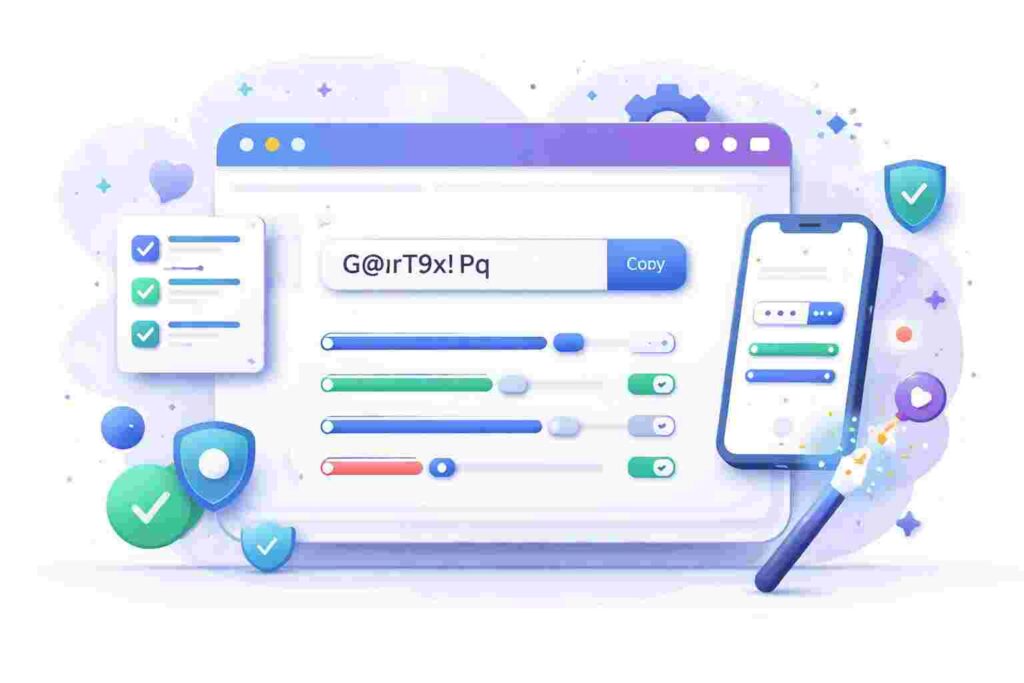
In an increasingly digital world, robust password protection is paramount. Online security breaches are no longer a rare occurrence; they happen every second, putting personal and sensitive information at risk. With hackers constantly devising new methods to infiltrate accounts, the need for strong, unique passwords has never been greater. This is where a password generator tool comes into play, providing a reliable means for users to create complex passwords that safeguard against potential threats.
Understanding Password Generator Tools
Password generator tools are software utilities designed to help users create secure passwords that are difficult to guess. These tools often employ various algorithms to ensure a high level of randomness and complexity. Understanding their fundamental aspects is crucial for leveraging them effectively.
Table of Contents
Definition of Password Generator Tools
A password generator tool creates passwords that typically combine letters, numbers, and symbols, ensuring the passwords are unique and strong. These tools are essential for maintaining cybersecurity, especially since individuals often struggle to create and remember various complex passwords for different accounts.
History and Evolution
The evolution of password generation tools can be traced back to the early days of computing when basic algorithms were used to create strings of characters. Over the years, as cybersecurity threats intensified, these tools evolved to incorporate advanced algorithms that enhance randomness, making it increasingly challenging for hackers to crack the generated passwords. Today, users have access to both online and offline tools capable of producing highly secure passwords with just a few clicks.
Common Features of Password Generator tool
- Customizable Length: Users can set the desired number of characters for their passwords.
- Character Variety: Most tools allow mixing uppercase and lowercase letters, numbers, and special symbols.
- Pronounceability: Some generators provide options for easier-to-remember yet secure passwords.
- Integrated Security Measures: Certain tools offer features to save passwords securely, avoiding reliance on memory.
- User-Friendly Interfaces: Most tools are designed to be intuitive, allowing users of all technical levels to generate passwords effortlessly.
- Multiple Passwords Generation: Users can generate several passwords in one go, making the process quicker.
How Password Generators Work
Understanding how password generators work can demystify the technology behind them and help users trust their effectiveness and security.
Algorithm Types
Password generators utilize various algorithms to create random strings of characters. Common algorithms include cryptographic algorithms, which provide a high level of unpredictability. Others incorporate simple database sources to pull random characters. By using complex methods, these algorithms work to produce passwords that are much harder to crack than typical user-generated passwords.
Randomness vs. Predictability
One of the key elements in password generation is the randomness factor. True randomness is vital in password generation, as predictable patterns can be easily exploited by cybercriminals. Effective generators focus on producing passwords that are truly random, ensuring that the odds of someone guessing or cracking the password are extremely low.
Encryption Methods Used
Many modern password generator tools implement encryption methods to securely store generated passwords. These methods often include techniques such as hashing and salting, which make it nearly impossible for anyone unauthorized to access the original password, even if they gain access to the database.
Impact of Strong Passwords on Security
Strong passwords have a profound impact on security across various industries, establishing critical links between password strength and vulnerability to attacks. These implications underscore the importance of employing effective password management strategies.
Healthcare Industry
In healthcare, the efficiency of password protection strategies significantly affects patient data security. Health organizations are often the targets of data breaches, and a robust password policy can help mitigate risks. For instance, the implementation of strong password policies is advisable as sensitive patient information is constantly under threat. A report by the Ponemon Institute highlighted that a staggering 60% of healthcare organizations have experienced a data breach due to weak passwords.
Financial Services
Financial institutions deal with vast amounts of sensitive information, making strong password protection absolutely essential. Banks and investment firms that utilize password generators often notice a marked reduction in phishing attacks and fraudulent transactions. A report from Cybersecurity Ventures estimated that cybercrime costs the global economy an astounding $6 trillion annually, emphasizing the dire need for improved password security measures across financial services.
E-commerce Sectors
The e-commerce sector is particularly vulnerable due to the plethora of transactions occurring online. Customers’ personal and financial information is at great risk if not adequately protected. Strong passwords, created through password generator tools, help secure these transactions. Companies implementing password management tools often see fewer chargebacks and fraud cases.
Strategic Advantages of Using a Password Generator
Implementing a password generator tool offers several strategic advantages, spanning both business efficiencies and enhanced security postures.
Time Efficiency
Creating strong passwords manually can be a time-consuming process. Password generators drastically reduce the time spent on this task, freeing up employees to focus on more critical business functions. Additionally, organizations can set policies that promote password security without making them a cumbersome task for employees.
Enhanced Security Posture
Utilizing a password generator significantly improves security postures by ensuring the generation of complex passwords that meet contemporary standards, including those recommended by cybersecurity bodies. This creates a barrier against hacking attempts and minimizes the risk of data breaches that could have long-term repercussions for any business.
Compliance with Regulations
Various industries are subject to compliance with regulations such as GDPR, HIPAA, and PCI-DSS. Using password generators can aid companies in meeting regulatory standards by enforcing stronger password policies, thereby avoiding hefty fines and maintaining their reputations.
Limitations and Risks of Password Generators
While password generator tools offer numerous benefits, they also come with limitations and potential risks that users should understand.
Over-Reliance on Automation
One of the significant drawbacks of relying solely on password generators is that users may develop an over-reliance on automation. As convenience takes precedence, users might neglect other essential security measures, leading to broader vulnerabilities. This could include failing to enable two-factor authentication or neglecting software updates.
Possible Security Breaches
Even the most advanced password generators are not entirely foolproof. If a password generator tool itself is compromised, hackers could gain access to all the generated passwords. Therefore, users must ensure they choose reputable generators with a track record of security. Regularly changing passwords is also essential to counteract potential risks.
User Behavioral Risks
- Weak Recovery Protocols: Users may rely too heavily on password recovery options, which are often less secure.
- Inconsistent Password Updates: Failing to update passwords regularly could lead to vulnerabilities.
- User Negligence: Some users may write their passwords down or store them insecurely, undermining the effectiveness of a password generator.
- Phishing Attacks: Users can still fall victim to attacks that mislead them into revealing passwords.
- Social Engineering: Even with complex passwords, users may be manipulated into giving away access.
Comparison of Popular Password Generator Tools
With a plethora of password generator tools available, comparing their features can help users select the most effective solution for their needs.
Feature Comparison Table
| Tool Name | Customizable Length | Character Variety | Save Option | User Ratings | Price |
|---|---|---|---|---|---|
| FreeToolsLand Password Generator | Yes | Uppercase, Lowercase, Numbers, Symbols | No | 4.9/5 | Free |
| LastPass Password Generator | Yes | Uppercase, Lowercase, Numbers, Symbols | Yes | 4.8/5 | Free |
| NordPass Password Generator | Yes | Uppercase, Lowercase, Numbers, Symbols | Yes | 4.7/5 | Free |
| Dashlane Password Generator | Yes | Uppercase, Lowercase, Numbers, Symbols | Yes | 4.6/5 | Free |
| Bitwarden Password Generator | Yes | Uppercase, Lowercase, Numbers, Symbols | Yes | 4.7/5 | Free |
| RoboForm Password Generator | Yes | Uppercase, Lowercase, Numbers, Symbols | Yes | 4.5/5 | Free |
User Reviews and Ratings
When researching password generator tools, user reviews often highlight strengths and weaknesses. Tool A has received commendations for its user-friendly interface and effective password saving options. Alternatively, Tool C has faced criticism for not allowing custom password lengths, which affects overall customization.
Cost-Benefit Analysis
When considering cost-effectiveness, it is crucial to evaluate what each tool offers versus its price. Free tools like Tool A may seem appealing, but if they lack essential security features, they could lead to greater costs in the event of a data breach. Paid tools usually come with enhanced security features and dedicated support, which can be invaluable for businesses.
Statistics and Market Trends in Password Security
The landscape of password security is continuously changing, driven by new developments in technology and the increasing severity of cyber threats. Understanding these trends and statistics is vital for making informed decisions about password security.
Password Breach Statistics
Statistical data reveals that approximately 81% of data breaches are a result of weak or stolen passwords. This staggering figure highlights the necessity for organizations and individuals alike to strengthen their security measures. Moreover, a survey from LastPass indicated that 59% of users reuse passwords, further illustrating the risks associated with password management practices.
Usage Patterns of Password Generators
Recent market analyses show that around 40% of internet users utilize password generators actively. This percentage is anticipated to rise significantly as awareness surrounding cybersecurity increases. Tools that offer integrated security functionalities are becoming increasingly popular.
Projected Market Growth for Security Tools
The global market for password management tools is projected to reach $4 billion by 2026, driven by the rising demand for security solutions in both personal and professional settings. This growth underscores the importance businesses place on robust security measures for safeguarding user data.
Real-World Case Studies of Enhanced Security
Real-life applications of password generator tools illustrate their effectiveness in improving security measures across various organizations.
Company A Case Study
Company A, a mid-sized healthcare provider, implemented a password generator tool after experiencing a significant data breach due to weak passwords. Post-implementation, the following improvements were noted:
- 90% Reduction in Breach Attempts: Following the integration of a password management system, breach attempts dropped significantly.
- Increased Employee Compliance: More than 80% of employees adhered to new password policies within the first month.
- Improved Security Audits: The company passed its cybersecurity audit, receiving commendations for its password policies.
Company B’s Diversified Security Approach
Company B, operating in the e-commerce sector, adopted a diversified security approach that included password generator tools, two-factor authentication, and regular security training for employees. The company reported:
- 75% Decrease in Fraud Cases: With the new measures in place, fraud attempts fell significantly.
- Positive Customer Feedback: The enhanced security measures improved trust and customer relations.
- Lower Operational Costs: Reducing fraudulent transactions minimized losses and operational disruptions.
Before and After Analysis on Security Breaches
A comparative analysis of security breaches before and after implementing password generator tools showcases the difference strong passwords can make:
- Before: An average of 10 data breaches per year.
- After: Data breaches reduced to 2 per year after implementation.
Future Outlook of Password Generation Technology
The realm of password generation technology is not static, continuing to evolve with advancements in artificial intelligence and user experience design.
AI in Password Generation
Artificial intelligence is poised to play a pivotal role in the future of password generators. By utilizing machine learning algorithms, future tools can offer recommendations that not only create strong passwords but can also analyze user behavior to detect potential security issues before they escalate.
Integration with Other Security Tools
As the demand for comprehensive security solutions grows, the integration of password generators with other security measures, such as two-factor authentication and biometric security, is on the rise. This holistic approach can provide enhanced protections across various platforms.
Predicted User Adoption Rates
Experts predict that user adoption of password generator tools will continue to rise sharply, with approximately 65% of users expected to utilize them within the next two years as awareness of password security grows. This trend will likely be fueled by a continuous increase in cyber threats.
Frequently Asked Questions about Password Generators
What Makes a Strong Password?
A strong password is typically at least 12 characters long and includes a mix of uppercase letters, lowercase letters, numbers, and special symbols. The more random and complex a password is, the harder it is for cybercriminals to crack. It should avoid using easily guessable information like birthdays or common words, as these can be easily exploited through dictionary attacks.
Are Password Generators Safe to Use?
Yes, most reputable password generators are safe to use, especially those that rely on advanced cryptographic algorithms for generating passwords. However, users should always verify the credibility of the tools they choose, ensuring they come from trusted sources and consistently maintain high-security standards. Additionally, regular updates and audits of password generator tools help to ensure their continued safety against evolving threats.
How Often Should I Change Passwords?
Experts recommend changing passwords at least every three to six months, particularly for accounts containing sensitive personal or financial information. If a breach occurs, users should change their passwords immediately. Employing a password generator can simplify the process of creating new, unique passwords regularly, which assists in maintaining strong security.
Can Password Generators be Hacked?
While individual passwords generated by these tools can be hacked, the tools themselves employ strong encryption methods that reduce the likelihood of compromise. However, if a password generator is poorly designed or outdated, it could become a target for attackers. Therefore, sticking to well-known and trusted password generator tools is critical for maintaining security.
What Features Should I Look for?
When choosing a password generator tool, users should look for customizable length options, a mix of character types, the ability to save generated passwords securely, user-friendly interfaces, and strong encryption practices. Additionally, consider if the tool integrates with other security measures, enhancing overall safety.
Are Free Tools Effective?
Free password generator tools can be effective, but users should exercise caution. Some free tools may compromise on security features, such as data encryption or safe storage options. It is essential to check reviews and verify the reputation of any free tool before relying on it for password generation.
Conclusion
In conclusion, adopting a password generator tool can vastly improve security measures in both personal and business environments. Emphasizing best practices, such as creating strong and unique passwords, is essential for safeguarding sensitive information. To enhance security, integrating password generators into your daily routine can provide peace of mind against the growing threats in the digital landscape.
- Recap of Smart Features: Customizability, security options, and efficiency.
- Final Thoughts on Security: The most effective strategy combines strong passwords with comprehensive security measures.
- Encouragement to Implement Best Practices: Start using a password generator today and safeguard your online information.